
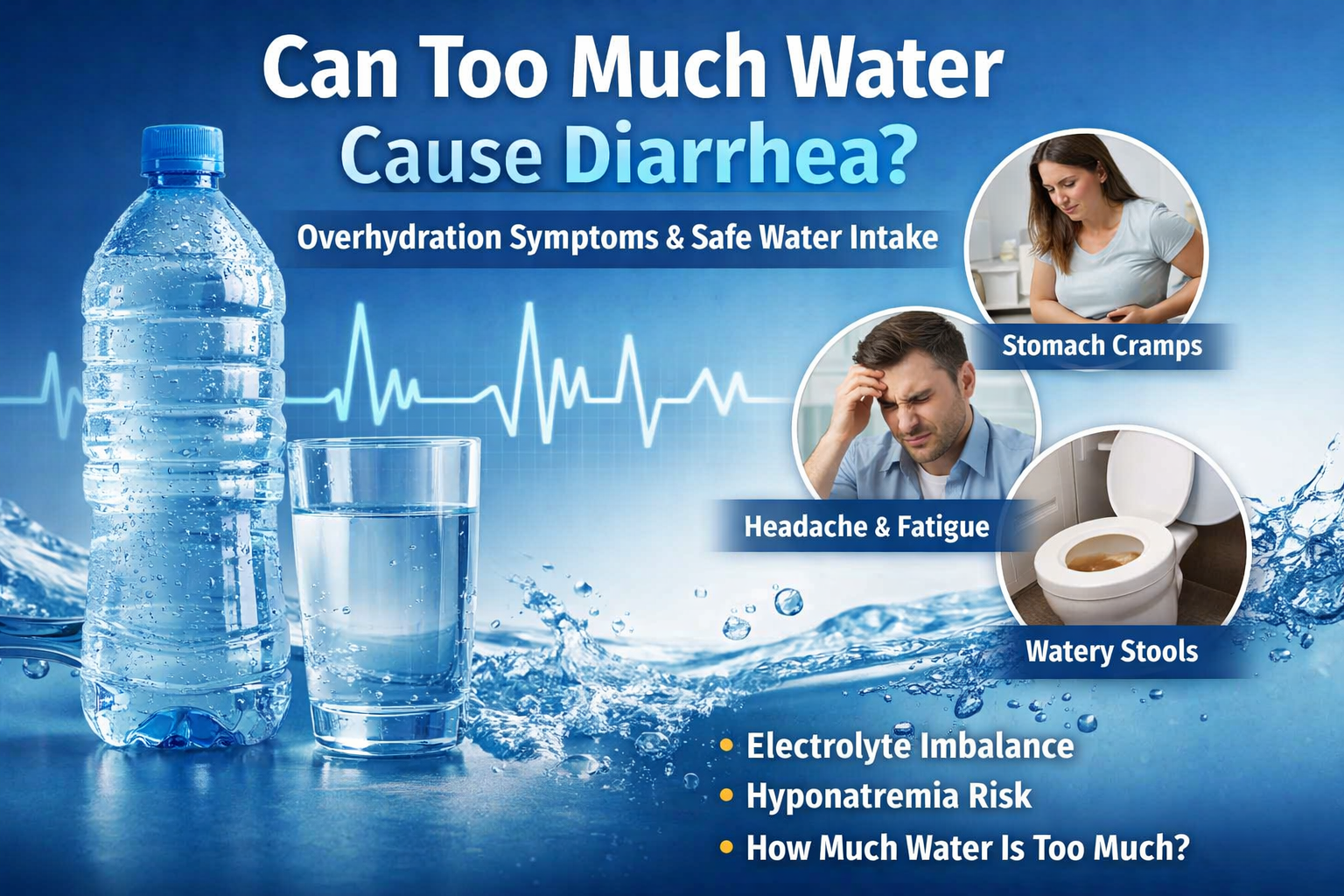
Overhydration Symptoms, Digestive Health & Safe Water Intake
Water is essential for survival, but many people ask an important question: can drinking too much water cause diarrhea? While proper hydration supports digestion, circulation, and overall health, excessive water intake can sometimes disrupt your digestive system and lead to loose stools. Understanding how too much water can cause diarrhea helps you maintain a healthy hydration balance without unwanted side effects.
In this medically informed guide, we will explain:
- Whether too much water causes diarrhea
- How overhydration affects digestion
- Symptoms of excessive water intake
- What hyponatremia is
- How much water is too much
- When to seek medical help
Let’s explore the science behind hydration and digestion.
Can Too Much Water Cause Diarrhea?
Yes, in certain situations, too much water can cause diarrhea, especially when large amounts are consumed quickly.
Your large intestine absorbs water from digested food to create solid stool. When you drink excessive amounts of water in a short time:
- Digestive enzymes can become diluted
- Electrolyte balance may shift
- Intestinal movement may increase
- Water absorption in the colon may decrease
When this happens, stool may become loose or watery.
However, diarrhea from excessive water intake is usually temporary and improves once fluid intake returns to normal levels.
Why Too Much Water Causes Diarrhea
Understanding the mechanism helps explain the symptoms.
1. Electrolyte Imbalance (Hyponatremia)
One major reason too much water causes diarrhea is electrolyte dilution. Drinking excessive water can lower sodium levels in your blood — a condition called hyponatremia or water intoxication.
Sodium is essential for:
- Fluid balance
- Nerve function
- Muscle contractions
- Proper intestinal absorption
When sodium drops, your body struggles to regulate water movement. This can reduce water absorption in the intestines, leading to loose stool.
2. Increased Intestinal Motility
Large volumes of water can stimulate bowel activity. When intestinal transit speeds up:
- Waste moves faster through the colon
- Less water is absorbed
- Stool becomes softer
This is why too much water may cause diarrhea shortly after heavy intake.
3. Diluted Digestive Enzymes
Excessive water intake can temporarily dilute stomach acid and digestive enzymes. This may result in:
- Incomplete digestion
- Mild bloating
- Loose stool
While this effect is usually mild, it can contribute to temporary digestive upset.
Symptoms of Too Much Water Intake
Mild overhydration symptoms include:
- Bloating
- Nausea
- Headache
- Clear, frequent urination
- Fatigue
- Mild diarrhea
Severe water intoxication symptoms may include:
- Confusion
- Muscle cramps
- Vomiting
- Seizures
- Brain swelling (medical emergency)
If diarrhea occurs alongside neurological symptoms, seek immediate medical care.
How Much Water Is Too Much?
Hydration needs vary based on:
- Age
- Body weight
- Activity level
- Climate
- Health conditions
General Guidelines:
- Women: About 2.7 liters per day
- Men: About 3.7 liters per day
This includes fluids from food and beverages.
Drinking slightly above these amounts gradually is usually safe. However, drinking large volumes (for example, more than 1 liter per hour repeatedly) increases the risk of overhydration symptoms.
If you’re wondering how much water is too much, the key factor is rate of consumption, not just total daily intake.
Can Too Much Water Cause Chronic Diarrhea?
In most cases, no.
Too much water causes diarrhea temporarily, but it does not typically lead to chronic digestive problems. Persistent diarrhea lasting more than two weeks is usually caused by:
- Viral or bacterial infections
- Irritable Bowel Syndrome (IBS)
- Food intolerances
- Inflammatory bowel disease
- Medication side effects
If diarrhea continues after adjusting fluid intake, consult a healthcare professional.
Who Is at Risk of Overhydration?
Certain individuals are more vulnerable to water overload symptoms:
1. Endurance Athletes
Marathon runners and long-distance athletes sometimes drink excessive water without electrolyte replacement.
2. People With Kidney Disease
The kidneys regulate fluid balance. Impaired kidney function increases risk of overhydration.
3. Individuals on Certain Medications
Some antidepressants and diuretics affect sodium regulation.
4. Compulsive Water Drinkers
Psychogenic polydipsia is a condition involving excessive water consumption.
Signs You Are Drinking the Right Amount of Water
Healthy hydration looks like:
- Pale yellow urine
- Urination every 2–4 hours
- Normal bowel movements
- No persistent bloating
Constantly clear urine may signal excessive water intake.
How to Prevent Diarrhea From Too Much Water
To avoid digestive discomfort:
✔ Sip Throughout the Day
Avoid chugging large amounts at once.
✔ Replace Electrolytes After Heavy Sweating
Sports drinks or oral rehydration solutions may help during intense activity.
✔ Listen to Thirst Signals
Your body naturally regulates hydration needs.
✔ Avoid Water Challenges
Drinking competitions can be dangerous and may cause water intoxication.
Dehydration vs Overhydration: Key Differences
| Dehydration | Overhydration |
|---|---|
| Dark urine | Clear urine |
| Dry mouth | Bloating |
| Constipation | Loose stool |
| Fatigue | Headache |
| Dizziness | Nausea |
Balance is essential for digestive health.
When to See a Doctor
Seek medical help if you experience:
- Persistent diarrhea
- Severe headache
- Muscle weakness
- Confusion
- Vomiting
- Symptoms lasting more than 3 days
Electrolyte imbalance can become serious if untreated.
The Bottom Line: Can Too Much Water Cause Diarrhea?
Yes — too much water can cause diarrhea, particularly when consumed rapidly in large amounts. This happens because excessive water dilutes electrolytes and reduces proper absorption in the colon.
However, in most healthy individuals, this effect is temporary and resolves once hydration returns to normal.
The key is balance.
Drink consistently throughout the day, monitor urine color, and avoid extreme water intake. Proper hydration supports digestion — but moderation prevents unnecessary digestive issues.
Frequently Asked Questions
Can too much water cause diarrhea immediately?
Yes. Drinking large volumes quickly can trigger temporary loose stools.
How long does diarrhea from too much water last?
Usually a few hours to one day after reducing intake.
What are signs of water intoxication?
Headache, confusion, nausea, muscle cramps, and clear frequent urination.
Is clear urine a sign of too much water?
Constantly clear urine may indicate overhydration.
Can overhydration be dangerous?
Yes. Severe hyponatremia can be life-threatening and requires emergency care.