
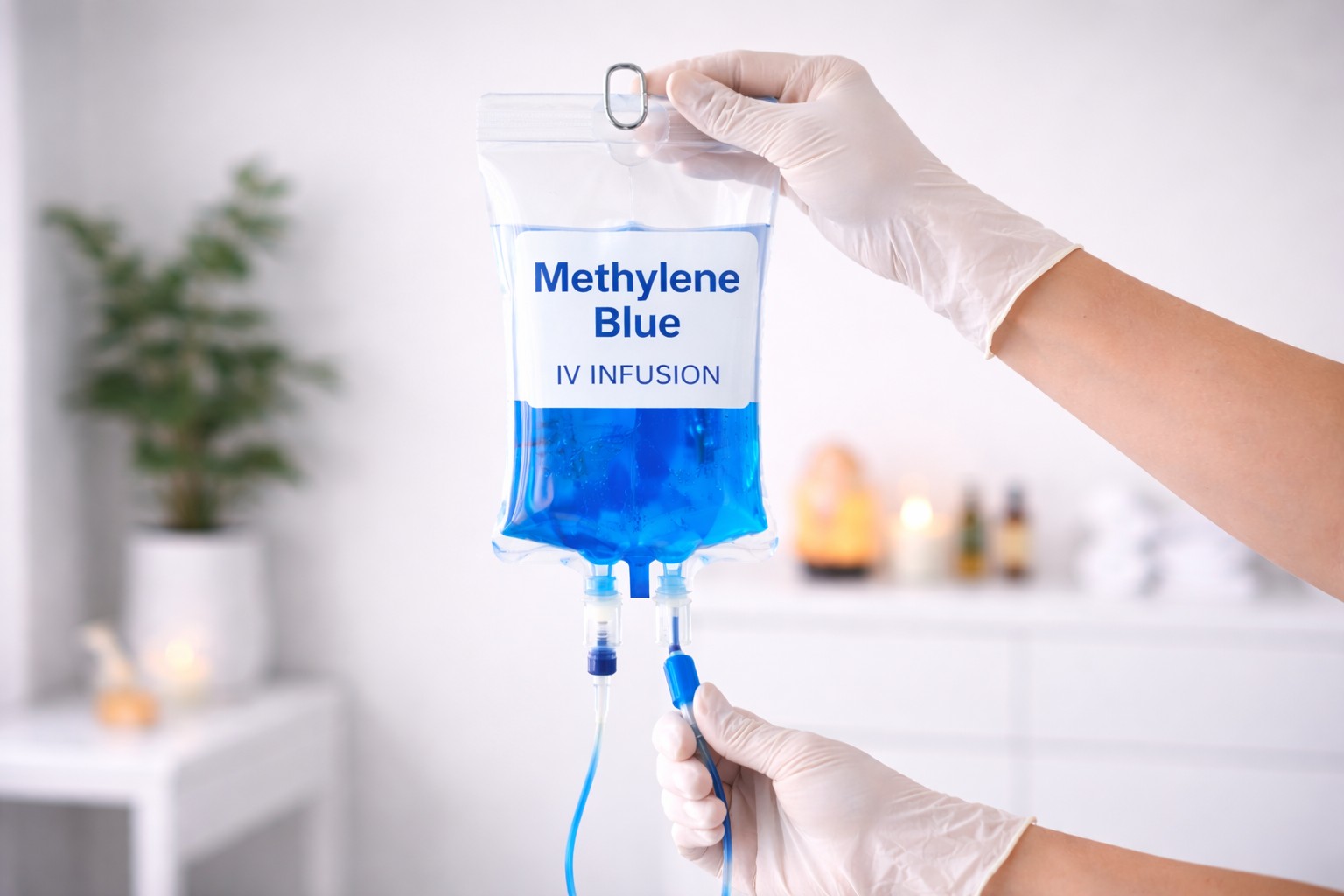
In recent years, the wellness and longevity space has seen growing interest in therapies that aim to support energy, cognitive function, and cellular health. One such compound gaining attention is methylene blue—an FDA-approved medication with a long-established role in clinical medicine that is now being discussed in broader health contexts.
What Is Methylene Blue?
Methylene blue is a synthetic compound first developed in the late 19th century and has been used in medicine for decades. The U.S.National Library of Medicine notes that methylene blue is FDA-approved for the treatment of methemoglobinemia, a condition in which hemoglobin cannot effectively release oxygen to tissues.
Beyond this, methylene blue has also been used in hospital settings for specific diagnostic and therapeutic purposes, including certain types of vasoplegia and ifosfamide-induced encephalopathy. Its longstanding medical use provides a foundation of understanding regarding mechanism, dosing, and safety in controlled environments.
Mechanism of Action: Why the Interest?
Interest in methylene blue within wellness and longevity discussions is largely tied to its effects at the cellular level. Research published in PubMed-indexed literature suggests that methylene blue may act on the mitochondria, the energy-producing structures within cells. Specifically, it has been described as a compound that can facilitate electron transport and potentially improve cellular respiration efficiency under certain conditions.
Additionally, some studies suggest antioxidant properties, as methylene blue may reduce oxidative stress by interacting with reactive oxygen species.
These mechanisms have led to growing curiosity about its potential role in:
– Cognitive support
– Fatigue management
– Cellular “energy” optimization
– Longevity-related pathways
Emerging Research and Limitations
Preclinical studies and limited human research have explored methylene blue in areas such as neuroprotection and cognitive function. For example, small studies have investigated its potential effects on memory and brain metabolism, given its interaction with mitochondrial function.
According to reviews available through PubMed, methylene blue has shown dose-dependent effects, meaning that low doses may have different—and sometimes opposite—effects compared to higher doses.
This variability highlights an important clinical insight – therapeutic windows are narrow, and dosing precision matters significantly. At present, there is no broad clinical consensus supporting routine use of methylene blue for wellness or longevity purposes.
Use in the Wellness Space
Despite limited large-scale clinical evidence, methylene blue is increasingly being discussed and, in some cases, offered in wellness settings—often with claims related to energy, mental clarity, or anti-aging. This trend reflects a broader shift toward consumer-driven health optimization, where individuals seek interventions beyond traditional medical indications.
However, it is important to remember that off-label or non-traditional use of medicine should be approached cautiously and under appropriate clinical oversight.
Safety Considerations
Methylene blue is not without risk. The National Institutes of Health and clinical pharmacology literature note several important safety considerations:
– It can interact with medications, particularly SSRIs and other serotonergic drugs, increasing the risk of serotonin syndrome
– It has dose-dependent toxicity
– It may cause side effects such as headache, dizziness, or elevated blood pressure
– It is contraindicated in certain populations, including individuals with G6PD deficiency
Because of these factors, methylene blue should not be viewed as a benign supplement, but rather as a pharmacologically active medication requiring medical evaluation and oversight.
A Balanced Perspective
The growing interest in methylene blue reflects a broader desire to better understand and influence cellular health and energy metabolism. While early research provides insight into potential mechanisms, the gap between experimental findings and clinical application remains significant.
For patients, being informed means asking:
– What is the intended use?
– Is there clinical evidence supporting this use?
– What are the risks and interactions?
– Is this appropriate given my medical history?
For providers, it underscores the importance of education, transparency, and responsible use.
Conclusion
Methylene blue represents an example of how established medications can re-emerge in new contexts as scientific interest evolves. While its role in specific medical conditions is well-defined, its use in the wellness and longevity space remains an area of ongoing research and discussion.
As with many emerging therapies, the path forward should be guided not by trends, but by evidence, safety, and informed clinical judgment.
References
NIH / National Library of Medicine – Methylene Blue Overview
https://www.ncbi.nlm.nih.gov/books/NBK557593/
PubMed – Methylene Blue and Mitochondrial Function
https://pubmed.ncbi.nlm.nih.gov/25863989/
PubMed – Neuroprotective Effects of Methylene Blue
https://pubmed.ncbi.nlm.nih.gov/19760660/
FDA – Methylene Blue (Methemoglobinemia Indication)
https://www.accessdata.fda.gov/drugsatfda_docs/label/2016/204630s002lbl.pdf
StatPearls – Methylene Blue (Mechanism, Safety, Contraindications)
https://www.ncbi.nlm.nih.gov/books/NBK557593/