
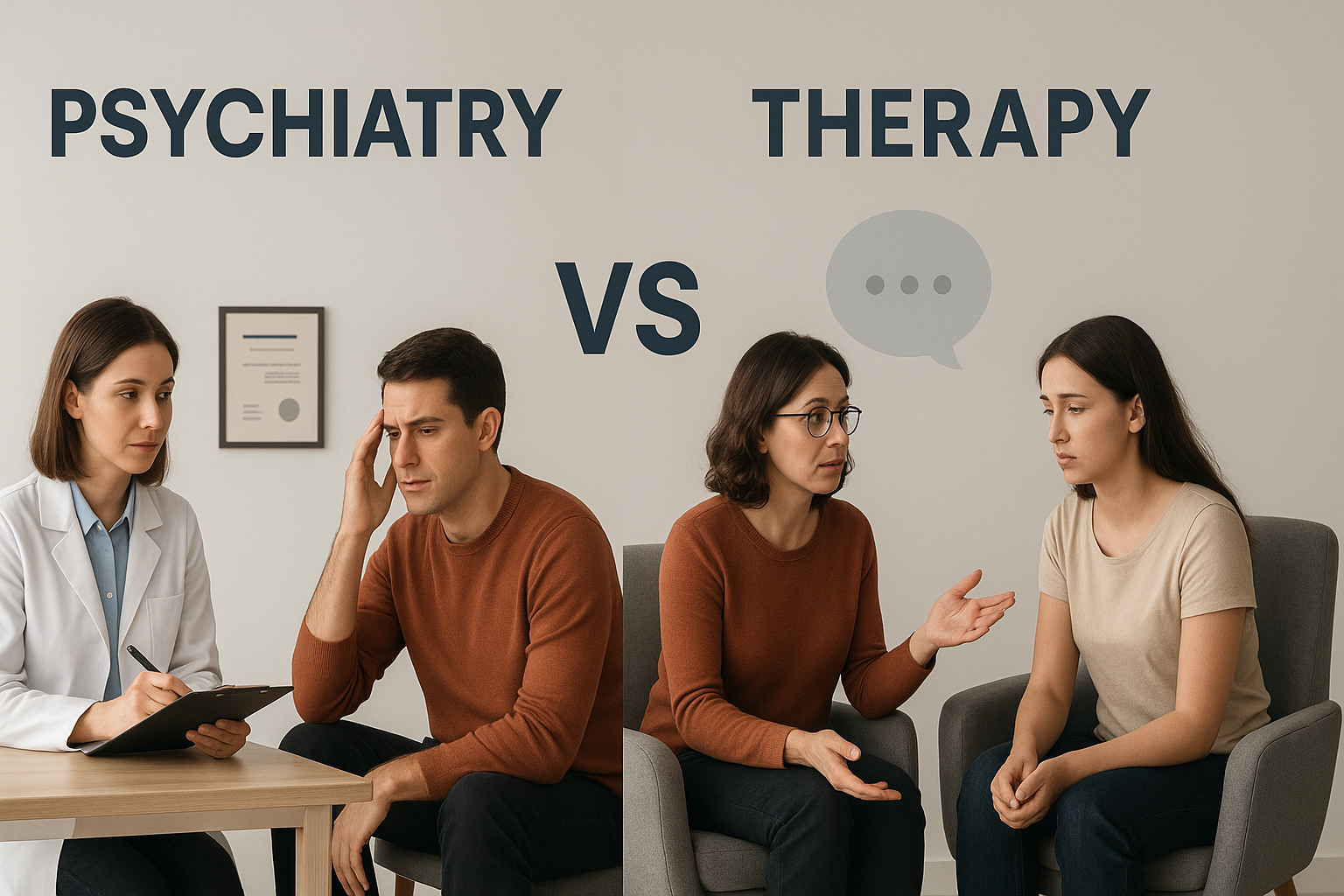
Understanding the differences between psychiatry versus therapy is essential for anyone seeking mental health support. Although both fields focus on improving emotional and psychological well-being, their approaches, methods, and goals differ significantly. Knowing which one aligns with your needs can help you make informed decisions about treatment, healing, and long-term growth.
Introduction to Modern Mental Health Care
Mental health awareness has grown tremendously in recent years. More individuals are recognizing the importance of seeking professional support for issues like stress, anxiety, depression, trauma, and relationship challenges. However, many people still feel unsure about where to begin. Should they see a psychiatrist? A therapist? Or both?
This confusion is common — especially because the roles of mental health professionals often overlap. Some provide talk-based treatment, some manage medications, and some do both. This guide breaks down everything you need to know so you can confidently choose the right path for your mental wellness journey.
What Is Psychiatry?
Psychiatry is a branch of medicine dedicated to diagnosing, treating, and preventing mental health disorders. Psychiatrists are medical doctors (MD or DO) who complete medical school followed by specialized training in mental health. Their expertise combines neuroscience, psychology, pharmacology, and behavioral medicine.
What Psychiatrists Do
Psychiatrists typically:
-
Diagnose mental health conditions
-
Prescribe and manage medications
-
Conduct psychiatric evaluations
-
Order lab tests, imaging, and medical investigations
-
Provide medical explanations for psychological symptoms
-
Monitor side effects and adjust medications
-
Collaborate with therapists, psychologists, and primary care physicians
Because they are medically trained, psychiatrists can identify physical conditions that may contribute to mental health symptoms — such as hormonal imbalances, thyroid disorders, sleep problems, or neurological issues.
Common Conditions Treated by Psychiatrists
Psychiatrists often work with conditions that have biological or neurological components, including:
-
Major depressive disorder
-
Bipolar disorder
-
PTSD
-
Anxiety disorders
-
OCD
-
Schizophrenia
-
Personality disorders
-
ADHD
-
Mood dysregulation
-
Substance use disorders
Medication can greatly reduce symptoms and improve functioning, particularly in disorders involving chemical imbalances.
What Is Therapy?
Therapy (also known as psychotherapy or counseling) involves structured conversations led by a licensed mental health professional. Therapists aim to help individuals understand emotional patterns, develop coping skills, process trauma, improve communication, and resolve internal conflict.
Unlike psychiatrists, most therapists do not prescribe medications. Instead, they use psychological techniques to help clients explore feelings, thoughts, and behaviors.
Types of Therapists
Therapy can be provided by:
-
Psychologists (PhD or PsyD)
-
Licensed Professional Counselors (LPC)
-
Marriage and Family Therapists (LMFT)
-
Licensed Clinical Social Workers (LCSW)
-
Mental Health Counselors
Each professional undergoes extensive training in human behavior, emotional processing, and therapeutic interventions.
Common Types of Therapy
Different therapeutic models address different needs:
-
Cognitive Behavioral Therapy (CBT): Reshapes thoughts and behaviors
-
Dialectical Behavior Therapy (DBT): Manages emotional dysregulation
-
Psychodynamic Therapy: Explores past experiences
-
EMDR: Specialized trauma-focused therapy
-
Family or Couples Therapy: Improves communication and relationships
-
Mindfulness-Based Therapy: Builds awareness and emotional balance
-
Solution-Focused Therapy: Fast and goal-driven
Therapy is often helpful for individuals facing emotional challenges, stress, relationship issues, or trauma.
Key Differences Between Psychiatry and Therapy
To understand these two approaches clearly, let’s compare them side by side.
1. Education and Training
| Profession | Credentials | Focus |
|---|---|---|
| Psychiatrist | Medical doctor + residency | Medical treatment, medications |
| Therapist | Master’s/Doctoral degree + supervised hours | Talk therapy, emotional support |
2. Treatment Approach
-
Psychiatry: Uses medications and medical assessments.
-
Therapy: Uses conversation-based strategies and emotional exploration.
3. Appointment Structure
-
Psychiatry: shorter appointments (15–30 minutes), often focused on medication management.
-
Therapy: longer sessions (45–60 minutes), focused on emotional processing.
4. Types of Issues Addressed
Psychiatrists handle:
-
Severe depression
-
Psychosis
-
Bipolar disorder
-
OCD
-
Disorders requiring medication
Therapists handle:
-
Stress
-
Trauma
-
Grief
-
Relationship issues
-
Mild to moderate anxiety or depression
The Role of Medication in Mental Health
Medication is often misunderstood. Many believe that taking medication means something is “seriously wrong.” In reality, psychiatric medications function similarly to medications for physical illnesses — they help regulate systems in the body that are not functioning optimally.
What Medications Can Do
-
Stabilize mood
-
Improve concentration
-
Reduce intrusive thoughts
-
Decrease anxiety
-
Balance brain chemistry
What Medications Cannot Do
-
Teach coping skills
-
Resolve trauma
-
Improve relationships
-
Restructure thought patterns
This is why many mental health professionals recommend a combination of medication and therapy for comprehensive improvement.
The Role of Talk Therapy
Therapy provides a safe, supportive environment for individuals to explore their inner world.
Benefits of Therapy
-
Increased self-awareness
-
Healthier emotional responses
-
Better communication
-
Improved relationships
-
Trauma healing
-
Stress reduction
-
Tools for long-term resilience
How Therapy Helps the Brain
Therapy encourages neuroplasticity — the brain’s ability to form new neural pathways. Over time, therapy can rewire emotional responses, reduce anxiety, and create healthier habits.
When to Choose a Psychiatrist
You may want to consult a psychiatrist if:
-
Symptoms are severe or long-lasting
-
You experience hallucinations or delusions
-
Anxiety or depression affects daily functioning
-
You’ve tried therapy but need additional support
-
There’s a history of mental illness in the family
-
You’re unsure if your symptoms may be medical in nature
A psychiatrist can provide diagnostic clarity and guide treatment from a medical perspective.
When to Choose a Therapist
You may prefer therapy if:
-
You need emotional support and coping skills
-
You’re dealing with relationship issues
-
You’re processing trauma or grief
-
You want to explore personal growth
-
You prefer non-medication approaches
-
You experience stress, burnout, or anxiety
Therapy is highly effective for people who want long-term personal development.
When You Need Both Psychiatry and Therapy
Many individuals benefit from a combined treatment approach. Medication can improve stabilization, while therapy offers deeper emotional healing.
This combination is especially useful for:
-
Major depression
-
PTSD
-
Bipolar disorder
-
Personality disorders
-
Chronic anxiety
-
Traumatic experiences
-
Severe mood swings
Combining approaches often leads to faster and more sustainable recovery.
How to Decide Which Path Is Right for You
Here are a few guiding questions:
1. What symptoms are you experiencing?
-
If symptoms are severe, consider psychiatry.
-
If symptoms are related to emotions or stress, therapy may be enough.
2. Are your symptoms interfering with daily life?
Difficulty functioning suggests a need for psychiatric evaluation.
3. Are you open to medication?
If you prefer natural or talk-based approaches, therapy may be your first step.
4. What goals do you have?
-
Healing trauma → therapy
-
Stabilizing mood → psychiatry
-
Building emotional resilience → therapy
-
Managing chronic symptoms → both
5. Have you sought help before?
If therapy alone has not provided relief, medication might enhance treatment.
Common Myths About Psychiatry and Therapy
Myth 1: Therapy is only for “serious problems.”
Truth: Many people use therapy for growth, confidence, and communication skills.
Myth 2: Medications will change your personality.
Modern psychiatric medications help regulate symptoms — not alter identity.
Myth 3: Only psychiatrists can diagnose mental health issues.
Therapists and psychologists can provide diagnostic assessments.
Myth 4: Therapy takes years to work.
Many structured therapies show results within 8–20 sessions.
Myth 5: You must choose between psychiatry and therapy.
In reality, many people benefit from both.
Why Mental Health Treatment Matters
Untreated mental health conditions can negatively affect:
-
Work performance
-
Relationships
-
Physical health
-
Sleep
-
Motivation
-
Self-esteem
-
Long-term happiness
Early intervention leads to better outcomes, shorter recovery periods, and improved quality of life.
The Importance of Finding the Right Mental Health Professional
Your comfort and connection with a mental health provider are crucial. Look for:
-
Credentials
-
Experience with your specific concerns
-
Communication style
-
Treatment approach
-
Availability
A strong therapeutic relationship improves trust, engagement, and outcomes.
Conclusion
Mental health care is not one-size-fits-all. Understanding the difference between psychiatry and therapy helps you decide the best path for your needs. Psychiatrists treat the medical aspects of mental health, while therapists focus on emotional and behavioral support. Each plays a vital role, and many people choose a combination of both for comprehensive care.
Ultimately, seeking help is a sign of strength. Whether you begin with a therapist, psychiatrist, or both, the most important step is acknowledging your needs and taking action toward healing.
In the end, choosing between psychiatry versus therapy depends on the unique challenges you face, your goals, and the type of support that aligns best with your journey toward mental wellness.