
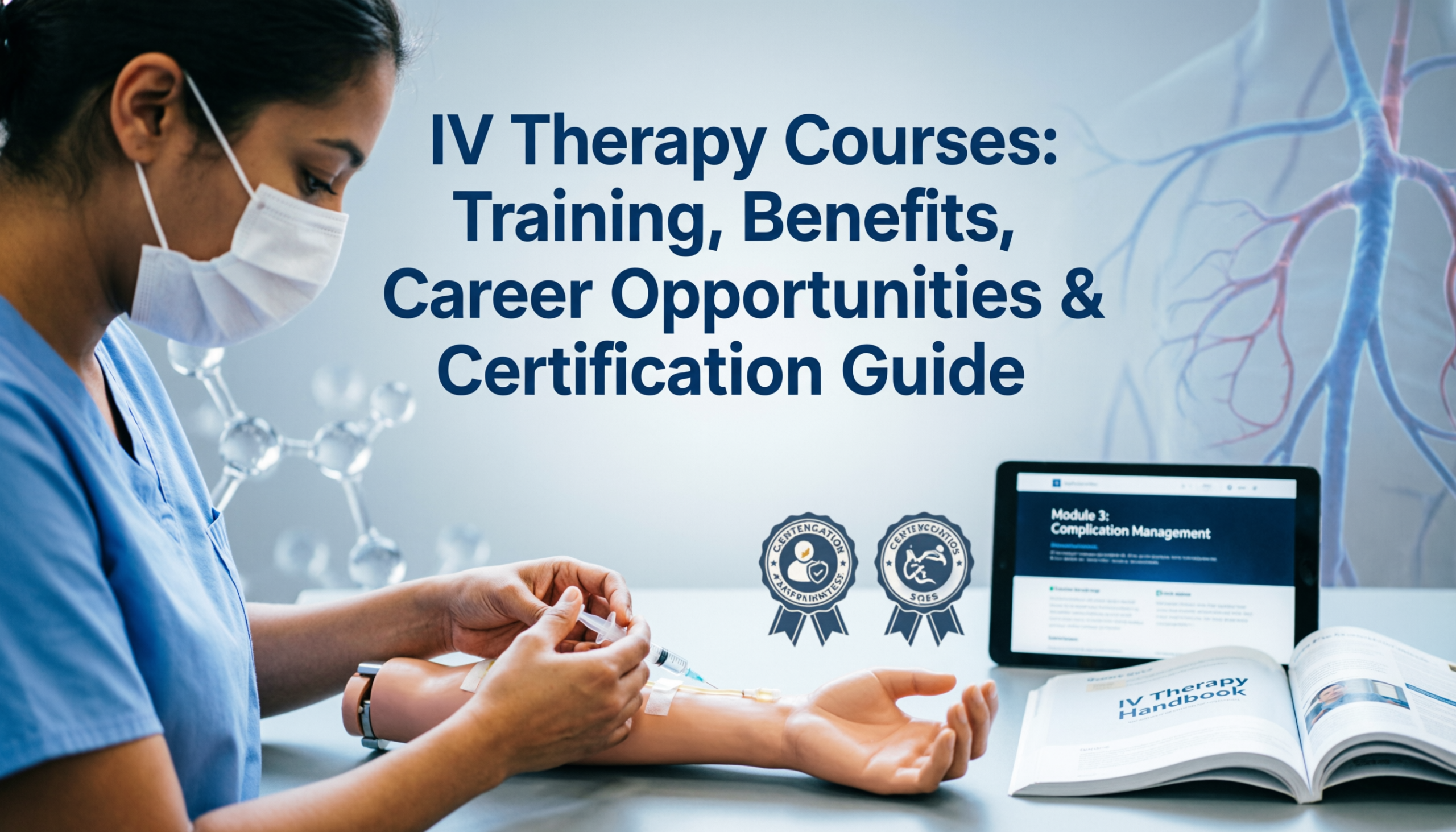
Modern healthcare relies heavily on advanced clinical skills that help professionals deliver faster, safer, and more effective patient care. One of the most essential skills in today’s medical environment is intravenous (IV) therapy. Hospitals, urgent care centers, wellness clinics, and home healthcare providers depend on trained professionals who can safely administer fluids, medications, and nutrients directly into a patient’s bloodstream.
Because of this growing demand, many healthcare professionals are enrolling in intravenous courses to strengthen their clinical expertise and expand their career opportunities. These specialized training programs teach the knowledge and hands-on techniques required for safe IV therapy, catheter insertion, patient monitoring, and complication prevention.
Whether you are a nurse, medical assistant, paramedic, or healthcare student, professional IV training can significantly enhance your clinical skills while improving patient outcomes.
In this guide, we’ll explore what IV training programs include, who should enroll, the benefits of certification, and how proper training can help healthcare professionals advance their careers in modern medicine.
What Are Intravenous Courses?
Intravenous training programs are specialized educational courses designed to teach healthcare professionals how to administer medications, fluids, vitamins, and nutrients directly into a vein using sterile techniques and medical equipment.
These programs typically combine theoretical knowledge and hands-on clinical practice. Students learn about human anatomy, infection control, patient safety protocols, and the proper use of IV equipment.
A well-structured IV training course helps healthcare professionals understand:
- Venous anatomy and physiology
- IV catheter insertion techniques
- Fluid and electrolyte balance
- Medication administration through IV therapy
- Infection control procedures
- Identifying and managing complications
- Patient monitoring and documentation
This knowledge is critical because IV therapy delivers substances directly into the bloodstream, meaning accuracy and safety are extremely important.
Why IV Training Is Important in Healthcare
Healthcare is evolving rapidly, and clinical skills must evolve with it. IV therapy has become one of the most frequently performed medical procedures in hospitals and clinics worldwide.
Proper training ensures that healthcare professionals can perform IV procedures safely while minimizing risks to patients.
1. Improves Patient Safety
Incorrect IV placement or improper technique can lead to complications such as infections, infiltration, or vein damage. Professional training teaches strict safety standards that protect patients and improve treatment outcomes.
2. Enhances Clinical Confidence
Many healthcare workers initially feel nervous about IV insertion. Hands-on training and supervised practice help professionals build confidence and accuracy when performing procedures.
3. Expands Career Opportunities
Professionals who complete intravenous courses often qualify for additional clinical responsibilities, which can lead to better job positions and higher salaries.
4. Supports Modern Medical Treatments
IV therapy is used for hydration, medication delivery, nutritional support, emergency care, and wellness treatments. Proper training ensures providers can deliver these treatments effectively.
Who Should Take IV Training Programs?
Intravenous training is beneficial for many healthcare professionals who are involved in patient care and medication administration.
Registered Nurses (RNs)
Nurses frequently administer IV medications and fluids in hospitals, clinics, and home care settings. IV training strengthens their procedural skills and helps them manage complications effectively.
Licensed Vocational Nurses (LVNs) / Licensed Practical Nurses (LPNs)
Many LPNs expand their responsibilities after completing IV training programs, making them more valuable in clinical environments.
Medical Assistants
Medical assistants working in urgent care centers or physician offices may perform IV therapy under supervision after completing training.
Paramedics and EMTs
Emergency responders often administer IV fluids and medications during critical situations. Proper training ensures they can do so quickly and safely.
Wellness Clinic Professionals
The growth of wellness clinics and mobile IV services has created demand for trained professionals who can safely administer hydration and vitamin infusions.
Key Skills Learned During IV Training
A comprehensive IV training program teaches several important clinical skills that healthcare providers use daily.
Venipuncture Techniques
Students learn how to identify suitable veins and insert IV catheters with minimal discomfort for the patient.
Sterile Procedures
Maintaining sterility during IV insertion is crucial to prevent infections and complications.
IV Equipment Usage
Training includes hands-on practice with IV catheters, tubing, infusion pumps, and safety devices.
Patient Monitoring
Healthcare professionals must monitor patients for signs of reactions, infiltration, or complications during therapy.
Complication Management
Students learn how to recognize and manage issues such as:
- Phlebitis
- Infiltration
- Allergic reactions
- Air embolism
- Infection
Understanding how to respond quickly to complications is one of the most valuable skills taught in IV training.
Types of IV Training Programs
There are several types of training programs depending on the experience level of the healthcare professional.
Basic IV Therapy Courses
These programs teach foundational skills such as venipuncture, IV insertion, and patient monitoring.
They are ideal for beginners or professionals who have limited experience with IV procedures.
Advanced IV Therapy Training
Advanced programs focus on complex procedures including:
- Central line care
- Pediatric IV therapy
- IV medication calculations
- Advanced infusion techniques
These programs are typically designed for experienced nurses or medical professionals.
Specialized Infusion Training
Some training programs focus on specific treatments such as:
- Nutritional IV therapy
- Hydration therapy
- Vitamin infusions
- Emergency medication delivery
These specialized courses are especially useful for professionals working in wellness clinics or mobile IV services.
How Long Do IV Training Programs Take?
The duration of IV training programs varies depending on the course structure and level of training.
Typical course formats include:
One-Day Intensive Courses
Short workshops that provide hands-on IV insertion training and essential theory.
Weekend Training Programs
These programs combine lectures and practical training over two or three days.
Multi-Week Certification Programs
Comprehensive programs that include classroom instruction, clinical practice, and final certification.
Many training providers offer flexible options including in-person classes, hybrid programs, or continuing education modules.
Benefits of IV Certification for Healthcare Professionals
Completing professional IV training offers several advantages beyond improving clinical skills.
Higher Employability
Healthcare facilities prefer professionals who already have IV certification because it reduces the need for additional training.
Career Advancement
Certified IV professionals may qualify for supervisory roles or specialized clinical positions.
Better Patient Care
Proper IV training improves treatment efficiency, patient comfort, and safety.
Expanding Healthcare Services
Professionals trained in IV therapy can participate in modern services such as hydration therapy, wellness infusions, and mobile IV treatments.
The Growing Demand for IV Therapy Skills
Healthcare trends show increasing demand for professionals trained in IV therapy.
Several factors are contributing to this growth:
Rising Chronic Health Conditions
Patients with chronic illnesses often require IV medications or nutritional support.
Growth of Wellness Clinics
Hydration therapy and vitamin infusion services are becoming popular for energy, recovery, and wellness support.
Home Healthcare Expansion
More patients are receiving treatments at home rather than in hospitals, which increases the need for skilled IV providers.
Emergency Medical Care
Paramedics and emergency responders rely heavily on IV therapy for fast medication delivery during critical situations.
Because of these trends, healthcare professionals who complete IV training often have access to more job opportunities across different medical settings.
Choosing the Right IV Training Program
Not all training programs offer the same quality or clinical experience. When selecting a course, it is important to consider several factors.
Accreditation and Certification
Choose programs recognized by healthcare institutions or nursing boards.
Hands-On Training
Practical experience is essential for building confidence and developing proper technique.
Experienced Instructors
Courses taught by experienced medical professionals provide valuable real-world insights.
Small Training Groups
Smaller class sizes allow instructors to give students personalized feedback and supervision.
Updated Curriculum
Healthcare procedures evolve, so training programs should follow modern safety guidelines and clinical standards.
Safety and Ethical Considerations
IV therapy involves direct access to the bloodstream, so strict safety and ethical standards must always be followed.
Healthcare professionals must:
- Follow infection control procedures
- Use sterile equipment
- Verify medication accuracy
- Monitor patients during treatment
- Document procedures carefully
Professional training ensures providers understand these responsibilities and can perform procedures safely.
The Future of IV Therapy Training
Healthcare technology and treatment methods continue to evolve, and IV therapy remains a core component of patient care.
New developments such as smart infusion pumps, improved catheter technology, and specialized infusion therapies are expanding the role of IV-trained professionals.
As healthcare systems focus more on efficiency and patient safety, professionals with strong clinical training will remain in high demand.
For healthcare providers who want to strengthen their skills and expand their career opportunities, enrolling in intravenous courses is a valuable step toward professional growth.
Conclusion
IV therapy is one of the most essential procedures in modern healthcare, allowing medications, fluids, and nutrients to be delivered quickly and effectively. Proper training ensures healthcare professionals can perform these procedures safely while maintaining the highest standards of patient care.
By enrolling in professional intravenous courses, healthcare providers gain valuable clinical skills, improve their confidence in performing IV procedures, and expand their career opportunities across hospitals, clinics, wellness centers, and home healthcare services.
As demand for IV therapy continues to grow, professionals with specialized training will remain essential to delivering safe and effective patient treatment in the evolving healthcare landscape.