
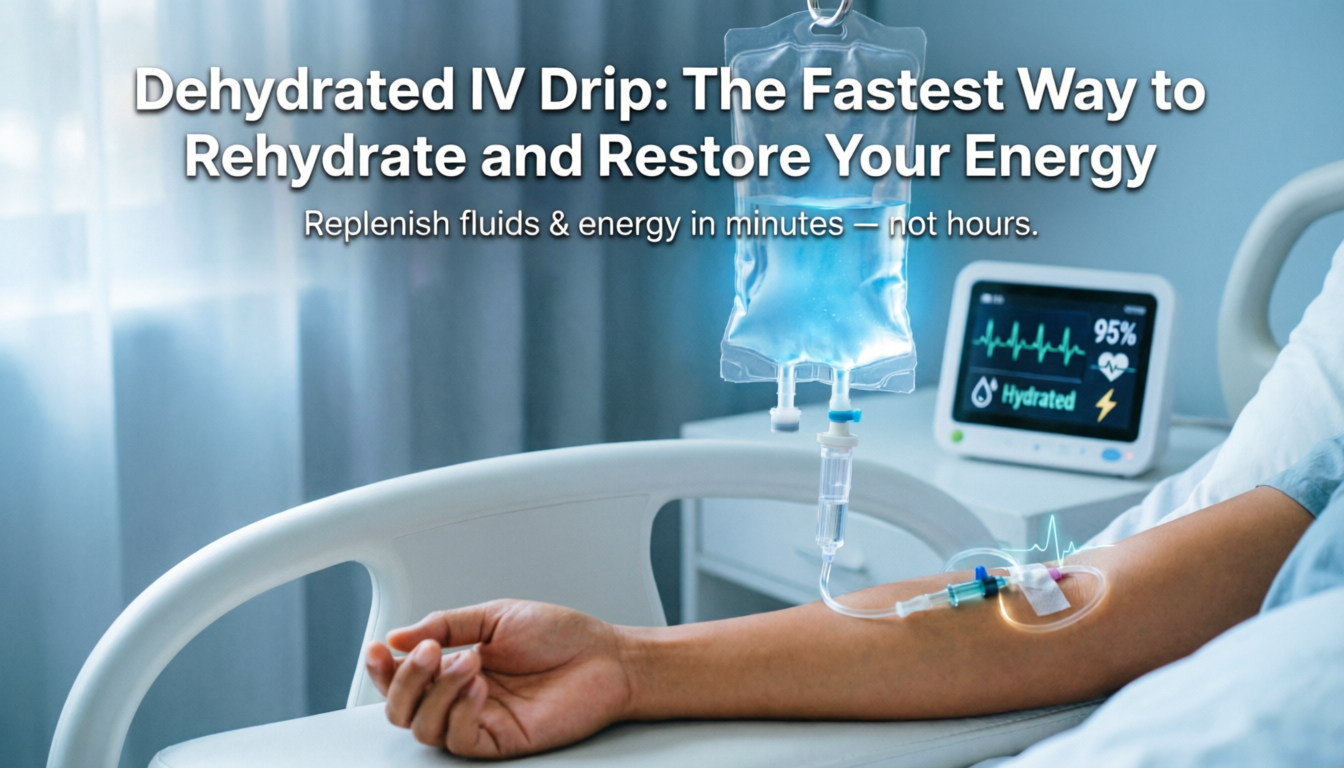
Dehydration can sneak up on anyone — whether you’re working long hours, recovering from illness, traveling, or simply not drinking enough water. When fluids drop too low, your body struggles to function properly. That’s where a dehydrated IV drip can make a powerful difference.
Unlike drinking water alone, IV hydration therapy delivers fluids, electrolytes, and essential nutrients directly into your bloodstream for rapid absorption. If you’re feeling fatigued, dizzy, weak, or experiencing symptoms of moderate dehydration, IV therapy may provide fast and effective relief.
In this comprehensive guide, we’ll explain how a dehydrated IV drip works, its benefits, who needs it, what to expect during treatment, and why it’s becoming one of the most trusted hydration solutions in modern wellness care.
What Is a Dehydrated IV Drip?
A dehydrated IV drip (also called IV hydration therapy for dehydration) is a medical treatment that delivers fluids directly into your bloodstream through an intravenous line. The drip typically contains:
- Sterile saline solution
- Electrolytes (sodium, potassium, magnesium)
- Vitamins (such as B-complex and Vitamin C)
- Optional medications for nausea or headache
Because fluids bypass the digestive system, the body absorbs 100% of the hydration immediately, making it far more effective than oral fluids in moderate to severe dehydration cases.
Why Dehydration Is a Serious Issue
Your body is made up of nearly 60% water. Every organ, tissue, and cell depends on proper hydration to function. When you’re dehydrated, your body can’t regulate temperature, circulation, or energy levels effectively.
Common Causes of Dehydration
- Excessive sweating
- Fever or illness
- Vomiting or diarrhea
- Alcohol consumption
- Intense exercise
- Travel and jet lag
- Heat exposure
- Not drinking enough water
Symptoms of Dehydration
- Dry mouth and lips
- Dark yellow urine
- Headache
- Dizziness
- Fatigue
- Rapid heartbeat
- Muscle cramps
- Confusion (in severe cases)
When symptoms worsen or don’t improve with water intake, IV hydration therapy becomes a reliable solution.
How a Dehydrated IV Drip Works
When you drink water, it must pass through your digestive system before entering the bloodstream. This process takes time and can be inefficient — especially if you are nauseous or vomiting.
With a dehydrated IV drip:
- A small IV catheter is inserted into a vein.
- Fluids and nutrients flow directly into circulation.
- The body immediately begins restoring hydration balance.
Most IV hydration sessions take between 30–60 minutes. Many patients report feeling improvement even before the session ends.
Benefits of a Dehydrated IV Drip
1. Rapid Rehydration
IV fluids restore hydration much faster than oral fluids.
2. Immediate Energy Boost
Electrolytes and B vitamins help improve cellular energy production.
3. Relief from Headaches & Dizziness
Dehydration-related headaches often improve quickly with IV fluids.
4. Improved Mental Clarity
Proper hydration enhances brain function and focus.
5. Faster Recovery from Illness
Whether it’s flu, food poisoning, or heat exhaustion, IV therapy speeds up recovery.
6. Hangover Relief
Alcohol causes dehydration. IV hydration helps flush toxins and restore electrolyte balance.
Who Should Consider a Dehydrated IV Drip?
IV hydration therapy is beneficial for:
- Athletes after intense workouts
- Travelers experiencing jet lag
- Individuals recovering from stomach flu
- People exposed to extreme heat
- Those experiencing migraine due to dehydration
- Busy professionals suffering from fatigue
- Individuals with food poisoning
- Post-surgery patients (as recommended by a provider)
If you have chronic conditions like kidney disease or heart problems, consult a healthcare provider before receiving IV therapy.
What’s Inside a Dehydration IV Drip?
A standard dehydrated IV drip usually includes:
Saline Solution
Restores fluid volume and improves circulation.
Electrolytes
Maintains proper nerve and muscle function.
Vitamin B Complex
Supports energy production and metabolism.
Vitamin C
Boosts immunity and helps fight inflammation.
Magnesium
Relieves muscle cramps and improves nerve function.
Some clinics also offer customized IV drips tailored to your specific needs.
How Long Does It Take to Feel Better?
Many patients report feeling better within minutes of starting the IV drip. Full benefits are usually experienced within a few hours after treatment.
Hydration levels stabilize quickly because the fluids are directly delivered to the bloodstream.
Is a Dehydrated IV Drip Safe?
Yes, when administered by trained medical professionals, IV hydration therapy is generally safe. Side effects are rare but may include:
- Minor bruising at injection site
- Temporary cool sensation in arm
- Mild discomfort during needle insertion
Professional IV clinics follow strict medical protocols to ensure safety and comfort.
Dehydrated IV Drip vs Drinking Water
| Factor | Drinking Water | Dehydrated IV Drip |
|---|---|---|
| Absorption Rate | Slow | Immediate |
| Effectiveness in Severe Dehydration | Limited | High |
| Works with Nausea | Difficult | Yes |
| Speed of Relief | Hours | 30–60 minutes |
| Electrolyte Replacement | Minimal | Customized |
For mild dehydration, water may be enough. But for moderate to severe dehydration, IV therapy provides faster and more reliable results.
How Often Should You Get IV Hydration?
It depends on your lifestyle and hydration needs.
- Occasional dehydration: As needed
- Athletes: Post intense workouts
- Frequent travelers: Before or after travel
- Chronic fatigue sufferers: Weekly or bi-weekly (consult provider)
Overuse is not necessary. Hydration therapy should support, not replace, healthy daily water intake.
Signs You Need Immediate IV Hydration
Seek professional care if you experience:
- Inability to keep fluids down
- Severe dizziness
- Rapid heartbeat
- Confusion
- No urination for 8+ hours
- Sunken eyes
- Severe weakness
These may indicate moderate to severe dehydration requiring urgent treatment.
IV Hydration for Special Situations
Heat Exhaustion
Rapid cooling and fluid restoration are critical.
Food Poisoning
IV therapy helps when vomiting prevents oral hydration.
Flu & Viral Illness
Replenishes lost fluids and supports immune recovery.
Migraine
Many migraines are triggered by dehydration.
Post-Workout Recovery
Helps reduce muscle soreness and improves recovery speed.
Cost of a Dehydrated IV Drip
Pricing varies depending on location and ingredients included. On average, sessions range from $100–$250.
Premium drips with added vitamins or medications may cost more. Always choose a reputable provider with licensed medical staff.
Why IV Hydration Is Trending
IV therapy has become popular among athletes, entrepreneurs, travelers, and wellness enthusiasts because:
- It delivers fast results
- It supports overall wellness
- It helps prevent burnout
- It enhances recovery
Many wellness clinics now offer mobile IV services, bringing hydration therapy to homes, hotels, and offices.
How to Prevent Dehydration Naturally
While IV therapy is effective, prevention is always better:
- Drink at least 2–3 liters of water daily
- Increase intake during hot weather
- Consume electrolyte-rich drinks when sweating heavily
- Eat water-rich foods (fruits & vegetables)
- Limit alcohol intake
- Monitor urine color (light yellow is ideal)
Frequently Asked Questions (FAQ)
1. How do I know if I’m dehydrated?
Look for symptoms like dry mouth, dark urine, fatigue, dizziness, and headache.
2. Is IV hydration better than sports drinks?
Yes, because it provides immediate absorption and precise electrolyte balance.
3. Can I drive after IV therapy?
Yes, most people can resume normal activities immediately.
4. Does IV hydration hurt?
Only a small needle pinch during insertion.
5. How long do results last?
Depending on lifestyle, hydration benefits can last several days.
Final Thoughts
A dehydrated IV drip is one of the fastest and most effective ways to restore hydration, improve energy, and accelerate recovery. Whether you’re dealing with illness, heat exposure, intense workouts, or simply feeling run down, IV hydration therapy provides rapid relief when your body needs it most.
While drinking water remains essential for daily health, IV hydration offers an advanced solution for those who require immediate rehydration and nutrient replenishment.
If you frequently experience dehydration symptoms, consult a licensed provider to determine whether IV hydration therapy is right for you.