
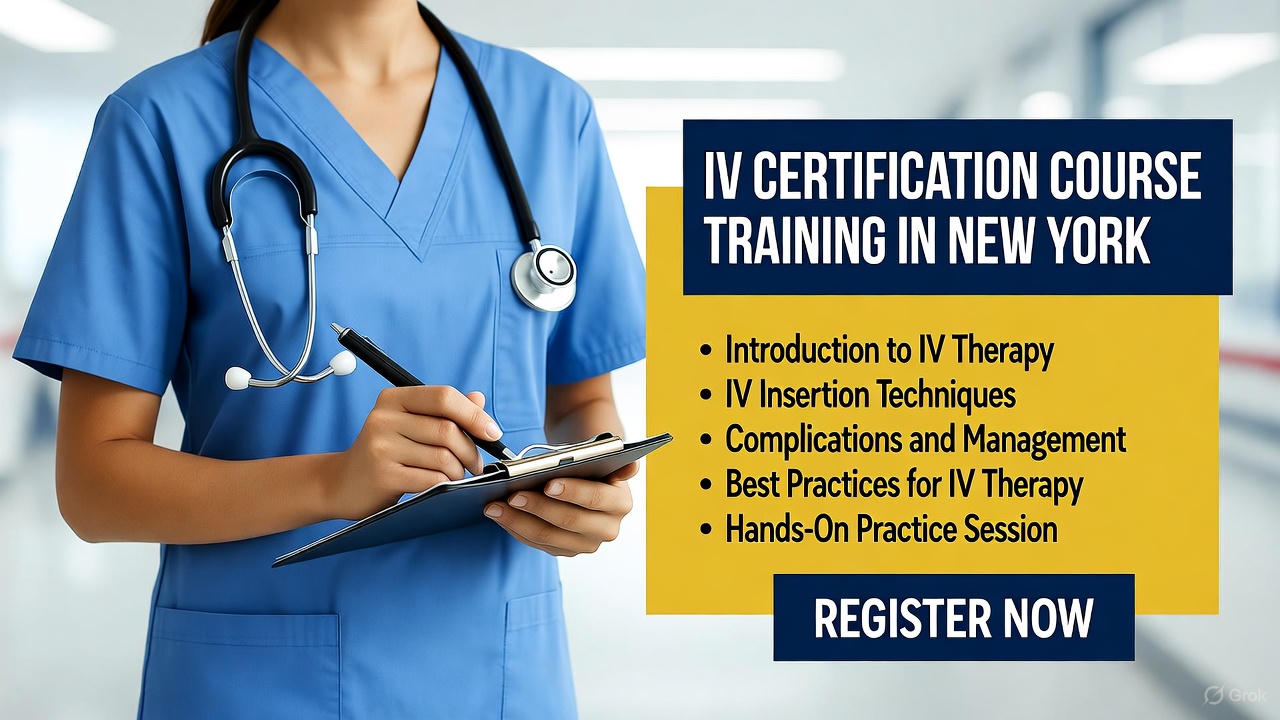
In today’s dynamic healthcare world, having specialized skills can set you apart — and one of the most in-demand competencies is intravenous (IV) therapy. Whether you’re a registered nurse (RN), licensed practical nurse (LPN), or allied health professional, enrolling in an IV Certification Course Training in New York offers a powerful way to advance your career, expand your scope of practice, and deliver high-quality patient care.
In this comprehensive guide, we’ll explore what IV therapy certification is, why it matters, what you can expect from a professional training course in New York, and how this credential can open new doors in the healthcare industry.
What Is IV Therapy Certification — and Why It Matters
IV therapy is the process of administering fluids, medications, and nutrients directly into a patient’s vein. This method ensures rapid and effective delivery, especially for patients who need immediate treatment. However, performing IV therapy safely requires strong knowledge of anatomy, pharmacology, and aseptic technique — which is exactly what you gain from a certification course.
An IV therapy certification:
-
Strengthens your confidence and competency in handling intravenous procedures
-
Enhances your employability and job prospects in hospitals, urgent care centers, and outpatient clinics
-
Allows you to comply with state guidelines for IV therapy administration
-
Ensures patient safety through standardized training and competency validation
For healthcare providers, being IV-certified signals professionalism, advanced skill, and a commitment to excellence in patient care.
Understanding IV Therapy Regulations in New York
New York State has clear regulations governing IV therapy, especially for LPNs and RNs. Licensed Practical Nurses can perform IV therapy only if they have completed an approved training course and demonstrated competency. The training must include both theory and hands-on practical components to ensure the professional is fully qualified to perform IV-related procedures.
Healthcare organizations in New York often require IV-certified staff as part of their clinical standards. Having a valid IV certification not only enhances safety but also ensures compliance with healthcare facility policies. Many facilities also encourage annual refresher training to maintain up-to-date skills.
For RNs, IV therapy is typically part of the professional scope of practice, but additional certification can enhance your expertise — especially if you work in critical care, emergency departments, or outpatient infusion settings.
What You’ll Learn in an IV Certification Course
A reputable IV Certification Course Training New York typically combines classroom learning with hands-on training. The goal is to build confidence and ensure you’re prepared to manage IV therapy safely and efficiently. Here’s what you can expect to learn:
1. Fundamentals of IV Therapy
-
Anatomy and physiology of the venous system
-
Indications for IV therapy and infusion types
-
Legal and ethical considerations for IV administration
-
Infection control, aseptic techniques, and patient safety
2. Equipment and Setup
-
Understanding IV catheters, needles, and infusion pumps
-
IV solution types and compatibility
-
Calculating flow rates and dosages
-
Proper labeling, storage, and preparation of IV fluids
3. Venipuncture and Catheter Insertion
-
Site selection for IV insertion
-
Step-by-step venipuncture techniques
-
Identifying and managing difficult veins
-
Patient comfort, pain management, and positioning
4. Monitoring and Maintenance
-
Assessing IV sites for signs of complications (infiltration, phlebitis, infection)
-
Monitoring infusion rates and patient responses
-
Maintaining sterile connections and changing dressings
-
Discontinuing IV lines safely
5. Troubleshooting and Emergency Response
-
Recognizing air embolism, infiltration, and allergic reactions
-
Managing occlusions and flow interruptions
-
Responding to patient distress during IV therapy
-
Documentation and reporting of incidents
A strong training program will assess both theoretical understanding and clinical skill proficiency before granting certification.
Who Should Take an IV Certification Course in New York?
IV certification courses are designed for healthcare professionals who are either entering the IV therapy field or seeking to renew their credentials. These include:
-
Registered Nurses (RNs)
-
Licensed Practical Nurses (LPNs)
-
Paramedics and EMTs
-
Medical assistants
-
Phlebotomists
-
Allied health professionals interested in infusion therapy
Even experienced nurses benefit from refresher courses, as IV therapy standards and best practices evolve regularly. With IV therapy playing a vital role in patient care, maintaining up-to-date skills is essential for safety and compliance.
Benefits of IV Certification for Healthcare Professionals
-
Career Advancement – IV-certified professionals are often preferred for higher-paying roles in infusion centers, emergency departments, and critical care units.
-
Expanded Skillset – IV certification builds clinical confidence, enabling you to perform more advanced patient care tasks.
-
Patient Safety – Proper IV training minimizes errors and improves patient outcomes.
-
Professional Credibility – Certification showcases your dedication to ongoing education and excellence.
-
Regulatory Compliance – Many healthcare employers require proof of IV therapy competency to meet licensing standards.
By completing an IV Certification Course Training New York, you demonstrate that you are fully qualified and prepared to deliver safe, efficient, and compassionate care.
How to Choose the Right IV Certification Course
When choosing a training program in New York, consider the following factors:
Accreditation and Approval
Ensure the training provider is recognized by local health departments or nursing boards. Accredited programs are more likely to meet professional and regulatory standards.
Experienced Instructors
Select a course led by certified professionals with clinical experience in IV therapy, emergency medicine, or infusion nursing.
Hands-On Practice
The best programs provide live practice sessions on mannequins or supervised clinical settings to ensure you gain real-world experience.
Comprehensive Curriculum
Look for a program that includes both theoretical instruction and practical application — covering anatomy, venipuncture, patient safety, and complication management.
Certification Validity
Confirm how long the certification is valid and whether you’ll need renewal or refresher courses annually.
What to Expect During Your Training
Most IV certification courses in New York run for 6–12 hours, depending on the level of instruction and your experience. The training usually includes:
-
Classroom lectures or online theory modules
-
Demonstrations and hands-on skill practice
-
Competency assessments or practical exams
-
Certification of completion upon successful performance
Some programs may also offer advanced options, such as pediatric IV therapy or infusion therapy for oncology and home health care.
Post-Certification Opportunities
Once certified, you’ll be qualified to perform IV insertions, manage infusions, and assist in intravenous medication administration under appropriate supervision. IV therapy skills are highly transferable and valuable across multiple healthcare settings, including:
-
Hospitals
-
Ambulatory clinics
-
Urgent care centers
-
Home infusion services
-
Medical spas and wellness clinics
Professionals with IV certification often find themselves more marketable, better paid, and trusted with greater responsibilities.
Tips for Success in IV Therapy Training
-
Review anatomy and physiology before starting to better understand the venous system.
-
Practice consistently — repetition helps build confidence in venipuncture.
-
Ask questions during training — clarify techniques and safety protocols.
-
Maintain aseptic technique at all times — this is key to patient safety.
-
Stay current with annual renewals or refresher courses to maintain your certification.
Final Thoughts
IV therapy is a cornerstone of modern healthcare. Whether you’re a nurse, paramedic, or medical assistant, mastering IV therapy can dramatically enhance your professional profile and patient care capabilities. A comprehensive IV Certification Course Training in New York provides everything you need to perform intravenous procedures confidently, safely, and in accordance with state standards.
Investing in IV therapy certification is not just about adding another credential — it’s about empowering yourself to make a greater impact in your healthcare career. As the demand for skilled, IV-trained professionals continues to grow, there’s never been a better time to take the next step in your professional development.