
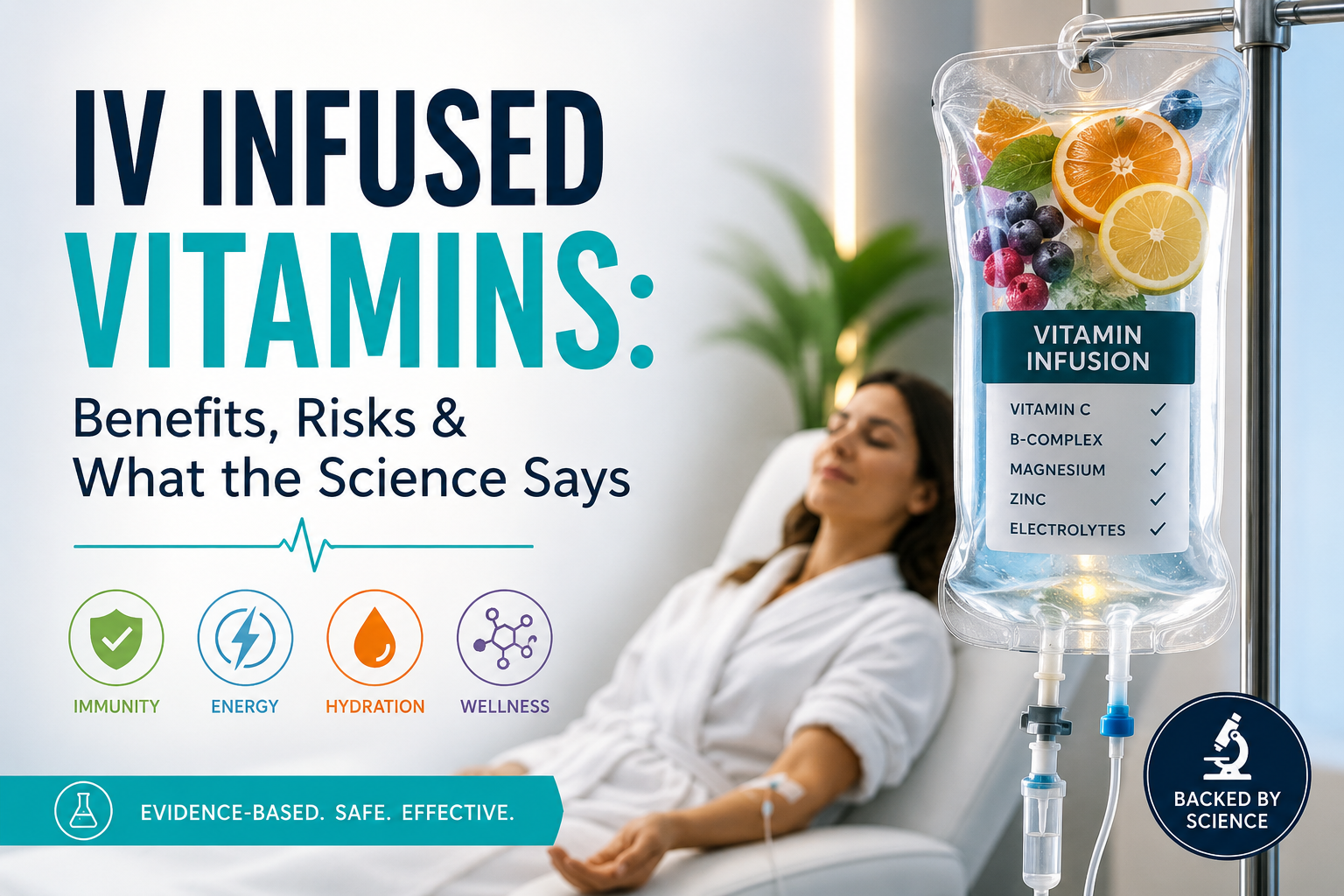
IV infused vitamins have grown from a niche medical treatment into a mainstream wellness trend, with drip bars, mobile nurses, and hotel-room infusions promising more energy, better immunity, glowing skin, and faster hangover recovery — all from a bag of fluid and 30 to 60 minutes in a chair.
The North American IV hydration therapy market was valued at $1.6 billion in 2024 and is projected to keep growing quickly through the rest of the decade, which tells you how mainstream this trend has become. But does the science back up what’s on the menu? Here’s a clear, evidence-based look at what these infusions actually do, what they cost, and who genuinely stands to benefit.
What Is IV Vitamin Therapy?
The treatment delivers fluids, vitamins, and minerals directly into your bloodstream through a small catheter, usually placed in your forearm — a process often called IV vitamin therapy or a vitamin infusion. Because the nutrients bypass your digestive system, they enter circulation immediately rather than being gradually absorbed through your gut — the core selling point behind every vitamin drip on the market.
Most drips start with a saline or electrolyte base, then add a custom blend of ingredients:
- Vitamin C — often included for immune support and antioxidant claims
- B-complex and B12 — marketed for energy and mental clarity
- Magnesium — used for muscle relaxation and stress relief
- Zinc — positioned for immune and wound-healing support
- Glutathione — marketed as a “detox” and skin-brightening add-on
A related but distinct option is the IV vitamin shot (intramuscular injection), which delivers a smaller dose into muscle tissue rather than a vein — commonly used for confirmed B12 deficiency.
How Long Does a Session Take?
Most sessions take 30 to 60 minutes, depending on the fluid volume and number of add-ins. You’ll typically remain seated while a nurse or technician monitors the infusion rate and checks for reactions.
How Long Do the Benefits Last?
This depends heavily on why you’re getting the infusion:
- Rehydration effects are often noticeable within the session and can last as long as you maintain normal fluid intake afterward.
- Correcting a true deficiency (like B12) can produce benefits that last weeks, since your body is replenishing an actual shortfall.
- General “energy” or “immunity” boosts in people with normal nutrient levels tend to be short-lived, if present at all, since there’s no underlying gap being filled.
Where the Evidence Actually Supports It
The strongest, best-documented case for this treatment is medical, not aesthetic:
- Dehydration. If you’re volume-depleted from illness, heat, or a rough night, IV fluids relieve headache, dizziness, and fatigue faster than drinking water alone. (See our full guide to [LINK: IV Hydration Therapy].)
- Confirmed nutrient deficiencies. According to the American Academy of Family Physicians, vitamin B12 deficiency affects roughly 2% to 3% of U.S. adults, with higher rates among older adults and people on certain medications like metformin or long-term proton pump inhibitors. For people with malabsorption conditions — pernicious anemia, Crohn’s disease, or a history of gastric surgery — IV or intramuscular B12 delivery is often the most reliable way to correct a real shortfall.
- Specific clinical situations. Hospitals use targeted infusions, like IV magnesium or IV iron, for well-defined medical indications under a physician’s supervision.
Where the Marketing Outruns the Research
For general wellness claims — energy, immunity, anti-aging, hangover cures — the evidence is much thinner than the marketing suggests.
According to theAmerican IV, there is limited evidence that IV vitamin therapy provides meaningful additional benefit to people who already have normal nutrient levels, regardless of what individual providers may claim about improved immunity or reduced fatigue. Harvard Health has reached a similar conclusion, noting that IV therapy is often marketed as a quick fix for fatigue, immune health, and hangovers, but that the scientific evidence doesn’t support those specific claims.
One frequently cited study gave a popular high-dose vitamin and mineral blend, the “Myers’ cocktail,” to adults with fibromyalgia over eight weeks. The treatment group did report improvements in pain, depression, and quality of life — but so did the group receiving a saline placebo, making it difficult to credit the vitamins themselves for the effect.
Even in more rigorous research settings, such as studies of high-dose IV vitamin C in critically ill hospital patients, results have been modest: some short-term improvements in organ-function scores, but no consistent evidence of reduced mortality or shorter hospital stays.
None of this means people feel nothing afterward. Rehydration is real, and so is the placebo effect tied to any treatment that feels deliberate and clinical. The distinction that matters is between “I felt better” and “the vitamins caused it.”
How Much Does It Cost?
Pricing varies by provider and location, but typical ranges look like this:
| Treatment Type | Typical Price |
|---|---|
| Basic hydration (saline + electrolytes) | $100–$150 |
| Standard vitamin blend (B-complex, vitamin C, etc.) | $150–$300 |
| Premium or specialty drips (glutathione, NAD+, high-dose add-ins) | $250–$500 |
Membership packages and multi-session bundles can lower the per-visit cost, but there’s no getting around the fact that this is an out-of-pocket wellness expense for most people.
Pricing above reflects typical industry ranges compiled across multiple U.S. providers as of 2026, not a single official source — actual prices vary by clinic, region, and ingredients. [INSERT: replace with your clinic’s current published pricing if publishing this for a specific business.]
Does Insurance Cover It?
Generally, no. Insurers classify elective wellness IVs — used for energy, hangover relief, beauty, or general immune support — the same way they classify treatments like acupuncture or massage: beneficial, perhaps, but not medically necessary.
Coverage becomes more likely only when:
- A physician diagnoses a specific nutrient deficiency (for example, documented B12 deficiency or iron-deficiency anemia)
- The infusion is prescribed as part of a medical treatment plan, not chosen as an elective service
- It’s administered in a clinical setting with the appropriate diagnosis code
Some people use HSA or FSA funds for out-of-pocket sessions, but eligibility depends on your plan administrator and whether the treatment is documented as medically necessary — worth confirming before you book.
The Risks Nobody Puts on the Menu
Any IV — wellness lounge or hospital — involves a needle in a vein, and that carries real, if generally low, risks:
- Infection, including bloodstream infections, from inadequate sterile technique
- Vein irritation, bruising, or phlebitis, especially with repeated sessions
- Nutrient overload, particularly with high-dose water-soluble vitamins that your kidneys have to filter out
Choosing a provider matters here — see what to look for in ([LINK: IV Therapy Certification] and [LINK: Medical Director Requirements]). Certain people should also get medical clearance before considering any infusion:
| Condition | Why It Matters |
|---|---|
| Kidney disease | High-dose vitamin C can raise oxalate levels and stress the kidneys |
| Heart failure or liver disease | Added fluid volume can worsen symptoms |
| Pregnancy or breastfeeding | Most wellness blends haven’t been well studied in this population |
| G6PD deficiency | High-dose vitamin C can trigger a serious blood reaction (hemolysis) |
| Chemotherapy or blood thinners | Some ingredients may interfere with these medications |
So, Is It Worth It?
Probably worth it if: you’re acutely dehydrated, you have a diagnosed deficiency, or a clinician has recommended it for a specific medical reason.
Probably skip it if: you’re generally healthy, eating a reasonably balanced diet, and hoping a drip will out-perform sleep, food, and a glass of water — especially at $150 to $300 a session.
The single most useful step before booking anything is basic bloodwork. If you’re actually low in something, you’ll know exactly what to treat instead of guessing with a menu item.
Frequently Asked Questions
Does IV vitamin therapy help with hangovers? The fluids and electrolytes can ease dehydration-related symptoms like headache and fatigue. There’s no strong evidence that the vitamins themselves speed up how your liver processes alcohol.
Can I exercise or drive after an IV vitamin drip? Most people can resume normal activity immediately, including driving. Some clinics recommend light activity only for the rest of the day, particularly after high-volume infusions.
Can athletes benefit from IV vitamin therapy? Rehydration and electrolyte replacement can help after heavy sweating or intense exertion, but most healthy athletes recover just as well with oral fluids, carbohydrates, and rest.
Can IV vitamin therapy replace oral supplements? No. For people without absorption issues, oral supplements and a balanced diet are generally just as effective at maintaining nutrient levels, at a fraction of the cost.
Can you get too much vitamin C from an IV drip? Yes. High-dose IV vitamin C can raise oxalate levels and stress the kidneys, which is a particular concern for people with existing kidney disease or a history of kidney stones.
The Bottom Line
IV infused vitamins aren’t a scam — they’re a legitimate medical tool that’s been repackaged as a lifestyle product. Used for genuine dehydration or a confirmed deficiency, they work well. Used as a general wellness ritual, you’re mostly paying a premium for hydration, relaxation, and the placebo effect — all of which are real, just not quite what’s advertised on the menu.
Considering this for yourself?
Before booking a session anywhere, choose a provider that’s transparent about ingredients, sterile compounding practices, and physician oversight — and get bloodwork done first if you’re unsure whether you’re actually deficient in anything. That single step tells you more than any drip menu will.
Are you an IV therapy provider or business owner?
If you’re on the providing side of this industry — running or launching an IV hydration clinic, mobile IV service, or drip bar — American IV (AIVA) is the industry’s professional membership association, not a patient-facing clinic. Membership runs $33/month ($396 billed annually) and includes:
- Compliance & legal support — a dedicated “Compliance Corner” with expert attorneys for regulatory questions specific to IV hydration businesses
- Training and certification — ongoing education to keep your practice current with industry standards
- Group purchasing discounts — reduced pricing on equipment, supplies, and software through AIVA’s vendor network
- Industry events and networking — conferences, webinars, and a podcast connecting you with other practitioners
- Career Center access — post jobs or find talent within the IV therapy field