
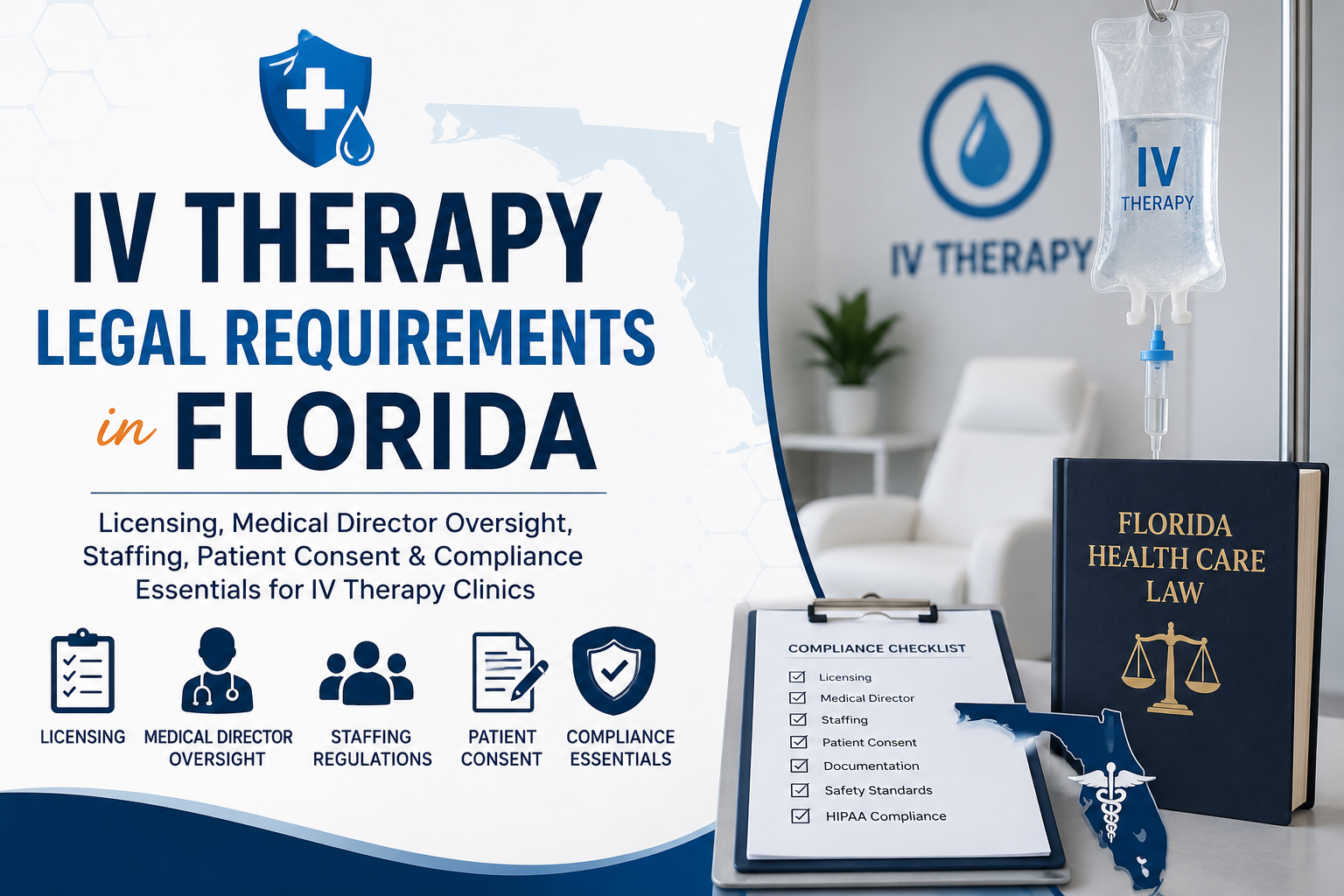
The IV therapy legal requirements in Florida are essential for anyone planning to open, manage, or work in an IV hydration clinic. As the wellness and infusion therapy industry continues to grow, clinic owners must understand Florida’s regulations regarding medical oversight, licensing, patient consent, staffing, and compliance. Following these legal requirements helps protect patients, reduce liability, and ensure long-term business success.
Whether you are a nurse, physician, entrepreneur, or healthcare provider planning to open an IV therapy business, understanding Florida’s laws is essential to avoid costly penalties and ensure patient safety.
This guide explains the key IV therapy legal requirements in Florida, including licensing, medical oversight, staffing rules, patient documentation, and compliance considerations.
Understanding IV Therapy Legal Requirements in Florida
Intravenous (IV) therapy involves delivering fluids, vitamins, minerals, medications, or nutrients directly into a patient’s bloodstream through an intravenous line.
Common IV therapy services include:
- Hydration therapy
- Vitamin infusions
- Immune support drips
- Athletic recovery treatments
- Wellness and energy infusions
- Hangover recovery treatments
- Medical IV treatments prescribed by physicians
Because IV therapy involves medical procedures and the administration of substances into the body, it is subject to healthcare regulations and professional licensing requirements.
Are IV Therapy Legal Requirements in Florida Different From Other States?
Yes, IV therapy is legal in Florida when provided in compliance with state healthcare laws and regulations.
However, IV therapy clinics must operate under appropriate medical supervision and ensure that all treatments are prescribed and administered by qualified healthcare professionals acting within their legal scope of practice.
Failure to comply with Florida regulations can result in fines, disciplinary actions, or business closure.
Medical Director Requirements Under IV Therapy Legal Requirements in Florida
In most cases, yes.
A licensed physician typically provides medical oversight for IV therapy operations. The medical director is responsible for ensuring treatments are medically appropriate and comply with applicable regulations.
Medical director responsibilities may include:
- Reviewing treatment protocols
- Approving standing orders
- Supervising clinical operations
- Ensuring patient safety standards
- Reviewing patient eligibility criteria
- Monitoring compliance with healthcare regulations
The level of involvement may vary depending on the clinic’s business model and services offered.
Who Can Provide Services Under IV Therapy Legal Requirements in Florida?
IV therapy should only be administered by licensed healthcare professionals authorized to perform such procedures under Florida law.
These may include:
Registered Nurses (RNs)
Registered nurses commonly administer IV therapy under physician orders or approved protocols.
Nurse Practitioners (NPs)
Qualified nurse practitioners may provide IV therapy services within their scope of practice and collaborative requirements.
Physicians
Licensed physicians can evaluate patients, prescribe treatments, and administer IV therapies.
Physician Assistants (PAs)
Physician assistants may provide IV therapy services under physician supervision and within their authorized scope of practice.
Clinic owners should always verify current licensing requirements and scope-of-practice regulations before providing services.
Patient Assessment Requirements for IV Therapy Legal Requirements in Florida
Before receiving IV therapy, patients should undergo a proper medical assessment.
A patient evaluation generally includes:
- Medical history review
- Current medications
- Allergies
- Existing health conditions
- Contraindications
- Vital signs assessment
- Treatment eligibility screening
Proper patient evaluation helps reduce risks and supports safe treatment outcomes.
Informed Consent and IV Therapy Legal Requirements in Florida
Florida healthcare providers should obtain informed consent before administering IV therapy.
An informed consent form should explain:
- Treatment purpose
- Potential risks
- Expected benefits
- Alternative treatment options
- Possible side effects
- Patient rights
Maintaining signed consent forms is an important part of risk management and legal compliance.
Documentation Rules Under IV Therapy Legal Requirements in Florida
Accurate documentation is essential for every IV therapy clinic.
Records should include:
- Patient intake forms
- Medical history
- Treatment notes
- Physician orders
- Consent forms
- Medication records
- Adverse event reports
- Follow-up documentation
Well-maintained records support continuity of care and help demonstrate regulatory compliance during audits or investigations.
Standing Orders and Treatment Protocols
Many IV therapy businesses operate using physician-approved standing orders and clinical protocols.
These documents help standardize treatment procedures and ensure consistency among healthcare providers.
Standing orders may cover:
- Approved IV formulations
- Patient eligibility criteria
- Dosage guidelines
- Emergency procedures
- Clinical workflows
Having properly developed protocols can significantly improve compliance and operational efficiency.
Florida Business Licensing Considerations
In addition to healthcare regulations, IV therapy businesses must meet general business requirements.
These may include:
- Business registration
- Federal tax identification
- Local permits
- Occupational licenses where applicable
- Liability insurance coverage
- Employee compliance requirements
Business owners should consult legal and healthcare professionals when establishing a new IV therapy practice.
HIPAA Compliance Requirements
IV therapy clinics must protect patient health information in accordance with federal privacy laws.
HIPAA compliance generally includes:
- Secure patient records
- Staff privacy training
- Protected electronic communications
- Data security safeguards
- Patient information access controls
Failure to protect patient information can result in significant penalties and reputational damage.
Emergency Preparedness and Patient Safety
Every IV therapy clinic should have procedures for handling medical emergencies.
Important safety measures include:
- Emergency response protocols
- Staff training
- Adverse reaction management
- Medication storage procedures
- Infection control standards
- Equipment maintenance schedules
Patient safety should remain the highest priority in every IV therapy practice.
Common Compliance Mistakes to Avoid
Many IV therapy businesses encounter regulatory challenges due to avoidable mistakes.
Common issues include:
- Operating without proper medical oversight
- Inadequate patient assessments
- Missing consent documentation
- Poor record-keeping practices
- Unapproved treatment protocols
- Insufficient staff training
- HIPAA violations
Implementing strong compliance systems can help prevent these problems.
Best Practices for Meeting IV Therapy Legal Requirements in Florida
To maintain compliance and build a successful business:
- Work with an experienced medical director
- Use comprehensive patient intake forms
- Maintain detailed treatment records
- Implement physician-approved protocols
- Train staff regularly
- Conduct compliance audits
- Stay updated on regulatory changes
- Prioritize patient safety and quality care
These practices help reduce legal risks while improving patient trust and clinic performance.
Frequently Asked Questions
Is a physician required to own an IV therapy clinic in Florida?
Ownership structures can vary. However, medical services generally require appropriate physician involvement and regulatory compliance. Professional legal guidance is recommended before establishing a clinic.
Can nurses start an IV therapy business in Florida?
Nurses may participate in IV therapy businesses depending on the business structure and applicable regulations. Proper medical oversight and compliance measures are essential.
Do IV therapy clinics need patient consent forms?
Yes. Informed consent is a critical component of patient care and risk management.
Are standing orders required for IV therapy?
Many clinics utilize physician-approved standing orders to standardize treatment and ensure regulatory compliance.
How important is documentation in an IV therapy clinic?
Documentation is essential for patient safety, legal protection, and regulatory compliance.
Conclusion
Understanding the IV therapy legal requirements in Florida is essential for building a compliant, safe, and successful IV therapy practice. From medical director oversight and patient assessments to HIPAA compliance and documentation standards, every aspect of clinic operations should be carefully managed to meet regulatory expectations and protect patient health.
For IV therapy business owners seeking compliance resources, medical director support, standing orders, consent forms, training, and industry guidance, visit American IV Association (AIVA) to access professional tools and resources designed specifically for the IV therapy industry.