
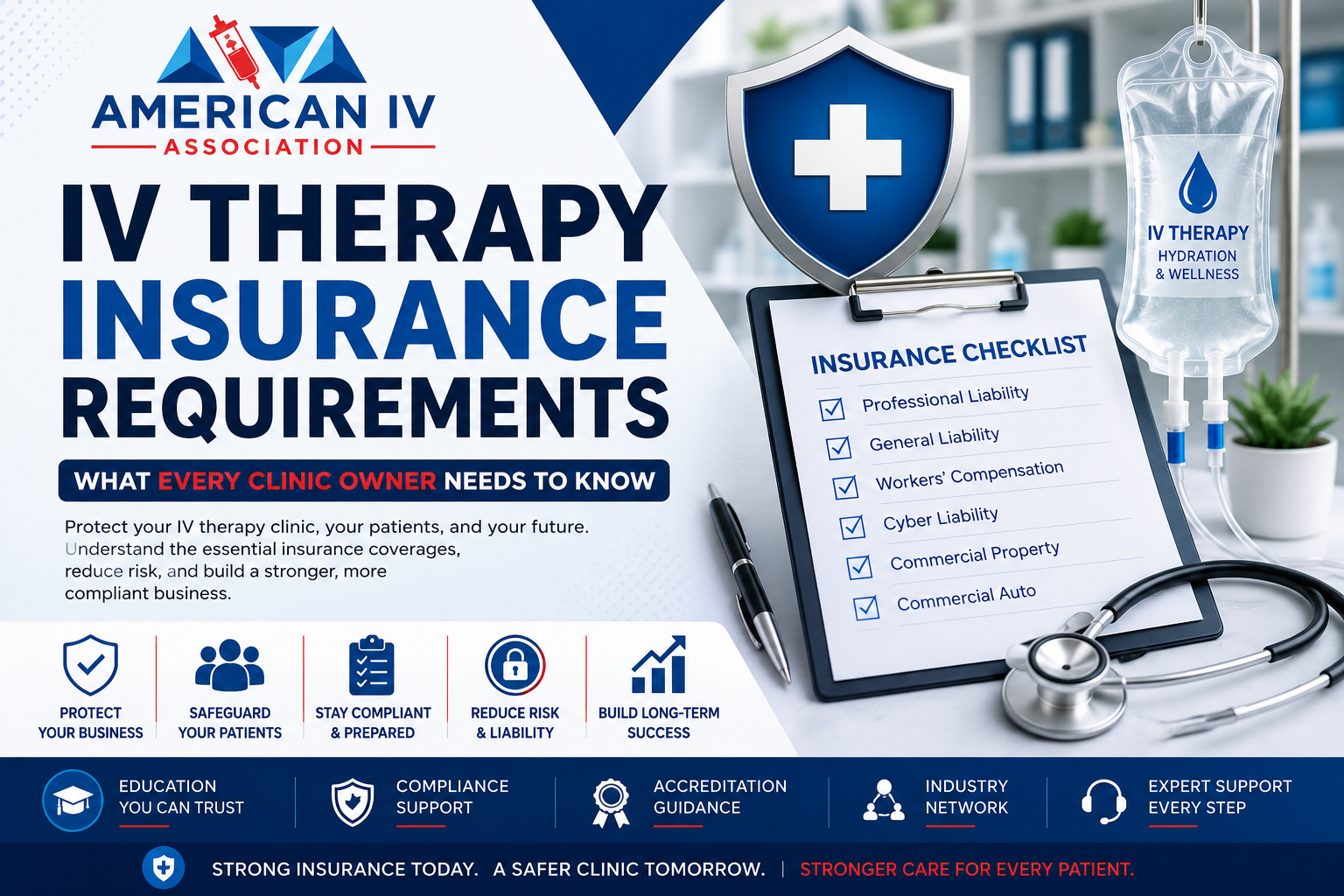
Launching and operating an IV therapy clinic involves much more than providing high-quality patient care. Clinic owners must also protect their businesses against potential financial and legal risks. Understanding IV Therapy Insurance Requirements is one of the most important steps in building a safe, compliant, and successful practice.
Whether you own a brick-and-mortar IV hydration clinic, operate a mobile IV therapy business, or are preparing to launch your first location, having the right insurance coverage can help protect your business, employees, patients, and professional reputation. Insurance is not simply another business expense—it is an essential investment in long-term stability and risk management.
Many new clinic owners assume that general business insurance is enough. However, IV therapy providers often face unique risks related to medical services, patient care, professional liability, equipment, data security, and state regulations. Without proper coverage, even a single claim or unexpected incident could result in significant financial losses.
This guide explains the most important insurance policies IV therapy businesses should consider, why they matter, and how they support safer business operations.
👉 Protect your IV therapy business with confidence.
Explore AIVA Membership to access educational resources, compliance guidance, and professional support that help clinic owners build stronger businesses.
Why Insurance Matters for IV Therapy Clinics
Every IV therapy clinic faces potential risks regardless of its size or experience.
These risks may include:
- Patient injuries
- Medication errors
- Slip-and-fall accidents
- Property damage
- Equipment loss
- Cybersecurity incidents
- Employee injuries
- Legal claims
- Business interruptions
Insurance helps reduce the financial impact of these unexpected events while allowing clinic owners to focus on delivering quality patient care.
More importantly, many landlords, medical directors, vendors, and business partners require proof of insurance before entering into agreements.
Insurance also demonstrates professionalism and preparedness, helping build trust with patients and healthcare partners.
Types of Insurance Every IV Therapy Clinic Should Consider
| Insurance Type | Why It Matters |
|---|---|
| Professional Liability Insurance | Protects against claims related to patient care or professional services. |
| General Liability Insurance | Covers third-party bodily injury and property damage. |
| Business Owner’s Policy (BOP) | Combines general liability with commercial property coverage. |
| Workers’ Compensation Insurance | Protects employees injured while working. |
| Commercial Property Insurance | Covers clinic equipment, furniture, and office assets. |
| Cyber Liability Insurance | Helps protect patient data and respond to cybersecurity incidents. |
| Commercial Auto Insurance | Essential for mobile IV therapy businesses using business vehicles. |
Not every clinic will need the same coverage, but understanding each policy helps owners make informed decisions based on their operations.
1. Professional Liability Insurance
Professional Liability Insurance—sometimes referred to as Medical Malpractice Insurance—is one of the most important policies for IV therapy providers.
Because IV therapy involves healthcare services, there is always a possibility that a patient could allege:
- Negligence
- Improper treatment
- Documentation errors
- Failure to obtain informed consent
- Clinical mistakes
Even if a claim is ultimately unfounded, legal defense costs can be substantial.
Professional Liability Insurance helps protect providers against covered legal expenses, settlements, or judgments arising from professional services.
Why It Matters
Healthcare providers work in a highly regulated environment where documentation, communication, and clinical standards are essential.
Having Professional Liability Insurance provides an additional layer of financial protection while supporting responsible risk management.
2. General Liability Insurance
While Professional Liability Insurance focuses on patient care, General Liability Insurance addresses everyday business risks.
Examples include:
- A visitor slipping in your reception area
- Property damage caused during business operations
- Third-party injuries inside the clinic
- Advertising-related claims
These situations may seem unlikely, but they can occur in any business.
General Liability Insurance helps cover legal costs, medical expenses, and damages associated with covered incidents.
Many commercial property leases require tenants to carry General Liability Insurance before occupying the space.
CTA – Protect Your Business Before Problems Arise
Running a successful IV therapy clinic requires more than excellent patient care.
👉 Become an AIVA Member to access compliance resources, educational tools, and professional guidance that support safer and more informed business operations.
3. Business Owner’s Policy (BOP)
A Business Owner’s Policy (BOP) combines two important coverages:
- General Liability Insurance
- Commercial Property Insurance
Many small and mid-sized IV therapy clinics choose a BOP because it provides comprehensive protection in a single policy.
Commercial Property Insurance may help cover:
- Medical equipment
- IV pumps
- Furniture
- Computers
- Office equipment
- Inventory
- Damage caused by covered events such as fire or theft
If your clinic depends on expensive equipment to operate, protecting those assets is critical.
A BOP often provides a cost-effective solution while simplifying insurance management.
Common Insurance Mistakes New Clinic Owners Make
Many new businesses unintentionally increase their financial risk by making avoidable mistakes such as:
- Purchasing only General Liability Insurance
- Underestimating equipment values
- Ignoring cyber security risks
- Failing to review policy limits annually
- Assuming personal insurance covers business activities
- Not updating insurance after business expansion
Working with qualified insurance professionals and staying informed about industry best practices can help reduce these risks.
4. Workers’ Compensation Insurance
If your IV therapy clinic employs nurses, physicians, administrative staff, or other healthcare professionals, Workers’ Compensation Insurance is an important part of your overall risk management strategy. In many states, this coverage is legally required once you hire employees.
Workers’ Compensation Insurance generally helps cover medical expenses, rehabilitation costs, and lost wages if an employee is injured or becomes ill while performing job-related duties.
Common workplace incidents may include:
- Needle-stick injuries
- Slips and falls
- Back injuries from lifting equipment
- Exposure to hazardous materials
- Repetitive strain injuries
Beyond meeting legal requirements, this insurance demonstrates your commitment to creating a safe workplace while protecting your business from significant financial liability.
5. Cyber Liability Insurance
Today’s IV therapy clinics rely heavily on electronic health records (EHRs), online appointment scheduling, payment systems, and digital patient communication. While technology improves efficiency, it also creates cybersecurity risks.
Cyber Liability Insurance helps protect businesses against expenses associated with:
- Data breaches
- Ransomware attacks
- Cyber extortion
- Unauthorized access to patient records
- Privacy-related lawsuits
- Notification and recovery costs
Because IV therapy providers handle sensitive patient information, maintaining strong cybersecurity practices should always be a priority.
Best Practices
Insurance should be combined with strong security measures such as:
- Multi-factor authentication
- Encrypted patient records
- Secure cloud backups
- Regular software updates
- Employee cybersecurity training
Together, these measures help reduce both operational and financial risks.
6. Commercial Property Insurance
Your clinic likely contains thousands of dollars in valuable medical equipment and business assets.
Commercial Property Insurance helps protect assets such as:
- IV pumps
- Medical supplies
- Refrigeration equipment
- Furniture
- Computers
- Office equipment
- Inventory
- Signage
Unexpected events such as fire, theft, vandalism, storms, or certain types of water damage can interrupt your business and create significant replacement costs.
Commercial Property Insurance helps businesses recover faster by protecting the physical assets needed to continue serving patients.
7. Commercial Auto Insurance
If your IV therapy business operates company-owned vehicles or provides mobile IV therapy services, Commercial Auto Insurance is essential.
Unlike personal auto insurance, commercial policies are designed for business-related travel and patient care activities.
Coverage may include:
- Vehicle accidents
- Property damage
- Bodily injury claims
- Vehicle repairs
- Legal defense costs
Mobile IV therapy providers should carefully review their policies to ensure patient visits, equipment transportation, and employee travel are properly covered.
Insurance Comparison Table
| Insurance Type | Protects Against | Recommended For |
|---|---|---|
| Professional Liability | Patient care claims | All IV therapy providers |
| General Liability | Third-party injuries & property damage | Every clinic |
| Business Owner’s Policy | Property + liability coverage | Small and growing clinics |
| Workers’ Compensation | Employee injuries | Clinics with staff |
| Cyber Liability | Data breaches & cyberattacks | Clinics using electronic records |
| Commercial Property | Equipment & office assets | Physical clinic locations |
| Commercial Auto | Business vehicle accidents | Mobile IV therapy businesses |
Insurance Considerations for Mobile IV Therapy Businesses
Mobile IV therapy businesses face unique operational risks because services are delivered outside a traditional clinical setting.
Owners should evaluate coverage for:
- Professional services provided at patient locations
- Transportation of medications and medical supplies
- Portable medical equipment
- Business vehicles
- Employee travel
- Off-site liability exposure
As mobile IV therapy continues to grow, reviewing insurance coverage regularly helps ensure your policy reflects your current operations.
State-Specific Insurance Considerations
Insurance requirements for IV therapy businesses can vary based on state laws, licensing requirements, and business structure.
Depending on where you operate, you may need to consider:
- Professional licensing requirements
- Medical director agreements
- Workers’ Compensation laws
- Commercial insurance minimums
- Business entity requirements
- Professional liability expectations
Before opening or expanding your clinic, consult qualified legal and insurance professionals who understand your state’s healthcare regulations.
How to Choose the Right Insurance Coverage
No two IV therapy clinics operate exactly the same.
When evaluating insurance options, consider:
- Your business structure
- The services you provide
- Number of employees
- Clinic location
- Mobile operations
- Annual revenue
- Equipment value
- Patient volume
- Future expansion plans
Review your policies annually to ensure they continue to meet your clinic’s evolving needs.
Questions Every Clinic Owner Should Ask an Insurance Provider
Before purchasing a policy, ask:
- Does this policy specifically cover IV therapy services?
- Are mobile IV therapy services included?
- What exclusions apply?
- What are the policy limits?
- Does the policy include legal defense costs?
- How are data breaches handled?
- Is medical equipment covered at replacement cost?
- Should coverage be updated as my business grows?
Asking the right questions can help prevent costly surprises later.
Common Insurance Mistakes to Avoid
Many clinic owners unintentionally increase their risk by making avoidable mistakes.
Common examples include:
- Purchasing only General Liability Insurance
- Skipping Professional Liability Insurance
- Underinsuring expensive medical equipment
- Ignoring Cyber Liability coverage
- Forgetting to update policies after expanding services
- Assuming personal auto insurance covers business activities
- Failing to review insurance annually
Regular policy reviews help ensure your coverage remains aligned with your clinic’s operations.
How AIVA Membership Supports Safer Business Operations
Insurance is one important component of risk management, but long-term success also depends on education, compliance, and staying informed about industry best practices.
American IV Association (AIVA) Membership provides access to valuable resources that help clinic owners strengthen their businesses, including:
- Educational resources
- Compliance guidance
- Accreditation support
- Industry updates
- Professional networking
- Business development resources
While membership is not a substitute for insurance or legal advice, it helps providers make more informed decisions and stay current with evolving industry standards.
👉 Ready to strengthen your IV therapy business?
Become an AIVA Member to access education, compliance resources, accreditation guidance, and professional support designed specifically for IV therapy providers.
Conclusion
Choosing the right insurance coverage is one of the most important investments an IV therapy clinic can make. Professional Liability Insurance, General Liability Insurance, Cyber Liability Insurance, Commercial Property Insurance, Workers’ Compensation, and Commercial Auto Insurance all play important roles in protecting your business against unexpected risks.
Insurance alone, however, is only part of building a successful practice. Ongoing education, regulatory awareness, strong operational procedures, and professional development are equally essential.
By combining comprehensive insurance coverage with trusted industry resources and continuous learning, clinic owners can build safer, more resilient businesses while delivering exceptional patient care.
Frequently Asked Questions
What insurance does an IV therapy clinic need?
Most clinics should consider Professional Liability Insurance, General Liability Insurance, Commercial Property Insurance, Workers’ Compensation (if required), Cyber Liability Insurance, and Commercial Auto Insurance if business vehicles are used.
Is Professional Liability Insurance required?
Requirements vary by state and business structure. Many healthcare providers carry Professional Liability Insurance because it helps protect against claims arising from professional services.
Do mobile IV therapy businesses need Commercial Auto Insurance?
Yes. If vehicles are used for business purposes, Commercial Auto Insurance is generally recommended because personal auto policies may not provide adequate coverage.
Does Cyber Liability Insurance protect patient information?
Cyber Liability Insurance may help cover costs associated with data breaches, ransomware attacks, and certain privacy-related claims involving electronic patient information.
Can insurance requirements vary by state?
Yes. Licensing rules, Workers’ Compensation laws, professional liability expectations, and business regulations differ by state, making it important to review local requirements.
How often should insurance policies be reviewed?
Review your insurance coverage at least once a year and whenever your clinic expands services, hires additional employees, purchases new equipment, or changes business operations.
How can AIVA Membership help clinic owners?
AIVA Membership provides educational resources, compliance guidance, accreditation support, industry updates, and professional networking opportunities that help clinic owners build stronger, more informed businesses.
What’s the biggest insurance mistake new clinic owners make?
One of the most common mistakes is relying only on General Liability Insurance while overlooking Professional Liability, Cyber Liability, or Commercial Property coverage that may be important for their specific operations.