
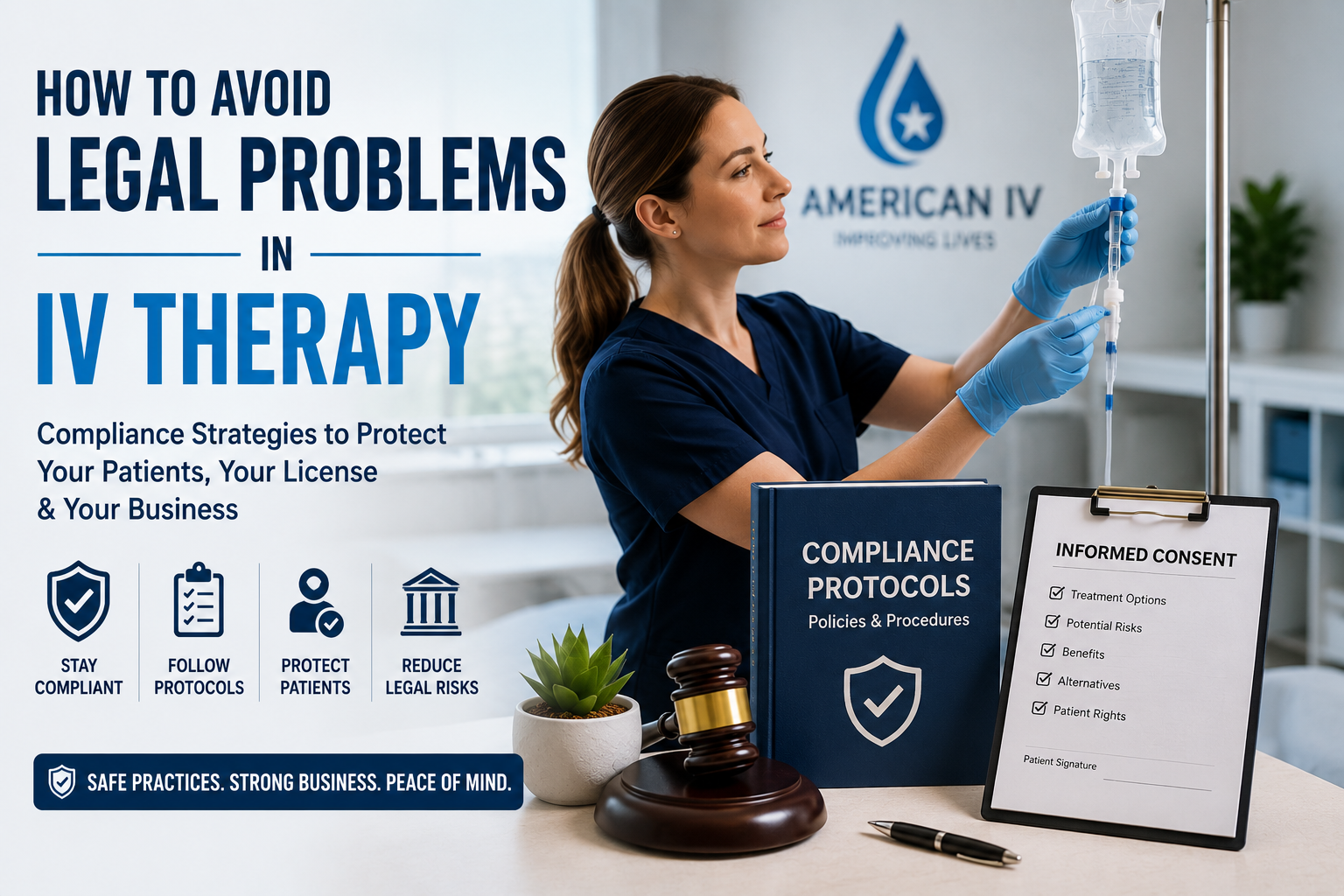
The IV therapy industry continues to grow as more consumers seek hydration, wellness, recovery, and preventative health services. While this growth presents exciting opportunities for entrepreneurs, nurses, physicians, and clinic owners, it also brings increased regulatory scrutiny. State medical boards, nursing boards, health departments, and federal agencies are paying closer attention to IV therapy businesses to ensure patient safety and legal compliance.
Unfortunately, many IV clinics focus heavily on marketing and operations while overlooking compliance requirements. A single violation—whether related to scope of practice, documentation, patient consent, or medical oversight—can result in fines, lawsuits, disciplinary actions, or even business closure.
Understanding how to avoid legal problems in IV therapy is essential for protecting your patients, your professional license, and your business. This comprehensive guide explores the most common legal risks facing IV clinics and provides practical strategies to help you stay compliant and build a sustainable operation.
Why Legal Compliance Matters in IV Therapy
IV therapy is not simply a wellness service. In most states, administering intravenous treatments is considered a medical procedure and falls under healthcare regulations.
Compliance is important because it helps:
- Protect patient safety
- Reduce malpractice risks
- Prevent regulatory penalties
- Safeguard professional licenses
- Improve clinic reputation
- Support long-term business growth
Successful IV therapy businesses understand that compliance is not just a legal requirement—it is a competitive advantage.
Ready to Build a Compliant IV Therapy Business?
👉Sign Up Today and Build a Compliant, Profitable IV Therapy Business
Understanding the Legal Landscape of IV Therapy
One of the biggest misconceptions in the industry is assuming that regulations are the same nationwide. In reality, IV therapy laws vary significantly by state.
Several agencies may influence how an IV clinic operates:
- State Medical Boards
- State Nursing Boards
- Departments of Health
- Occupational Licensing Agencies
- Federal Healthcare Regulators
- HIPAA Enforcement Authorities
Because regulations differ, business owners should regularly review state-specific requirements before launching or expanding services.
Common Legal Problems Faced by IV Therapy Clinics
Understanding the most frequent compliance issues can help clinic owners avoid costly mistakes.
1. Practicing Beyond Scope of Practice
Scope of practice violations are among the most common legal problems in healthcare.
Examples include:
- Nurses performing unauthorized assessments
- Staff prescribing treatments without authority
- Administering therapies beyond licensure limitations
- Improper delegation of medical responsibilities
Every team member should clearly understand their legal responsibilities and limitations.
How to Prevent It
- Verify all licenses regularly
- Review state nursing board requirements
- Establish written protocols
- Provide ongoing compliance training
2. Inadequate Medical Director Oversight
Many states require physician oversight for IV therapy services.
Problems arise when clinics:
- Lack an active medical director
- Use outdated standing orders
- Fail to conduct chart reviews
- Operate without clinical supervision
A medical director should actively participate in clinical governance rather than serving as a name on paperwork.
Best Practices
- Maintain documented oversight activities
- Conduct regular protocol reviews
- Update standing orders annually
- Ensure physician involvement in patient care policies
3. Insufficient Patient Screening
Every patient is unique, and not every individual is a suitable candidate for IV therapy.
Failure to identify contraindications can lead to:
- Adverse reactions
- Medical emergencies
- Lawsuits
- Regulatory investigations
Essential Screening Components
- Medical history review
- Medication assessment
- Allergy verification
- Vital signs evaluation
- Risk factor identification
Thorough screening protects both patients and providers.
The Importance of Proper Documentation
If legal issues arise, documentation often becomes the strongest defense available.
Poor documentation can make it appear that care was never provided, even when it was.
Documentation Should Include
- Patient demographics
- Health history
- Clinical assessments
- Treatment plans
- Informed consent forms
- Medication administration records
- Follow-up notes
The principle is simple:
If it wasn’t documented, it may be difficult to prove it happened.
Creating Effective Informed Consent Procedures
Informed consent is more than obtaining a signature.
Patients should understand:
- Treatment purpose
- Potential benefits
- Possible risks
- Alternative options
- Expected outcomes
Common Consent Mistakes
- Using outdated forms
- Missing signatures
- Incomplete risk disclosures
- Failing to answer patient questions
Strong consent procedures reduce liability and improve patient trust.
State-Specific Compliance Considerations
State laws often determine:
- Who may administer IV therapy
- Medical director requirements
- Delegation authority
- Mobile IV therapy regulations
- Telehealth restrictions
- Business ownership structures
Examples of State Variations
Some states allow greater autonomy for advanced practice providers, while others require direct physician involvement.
Because requirements change frequently, businesses should regularly review state regulations and seek professional legal guidance when necessary.
Mobile IV Therapy Compliance Challenges
Mobile IV therapy services have become increasingly popular. However, operating outside a traditional clinic environment introduces additional compliance concerns.
Key Considerations
- Patient privacy protection
- Transportation of medical supplies
- Emergency response planning
- Secure documentation systems
- Professional liability coverage
Mobile providers should develop policies specifically addressing field operations.
Growing a Mobile IV Business?
Sign up with American IV to gain access to educational resources and operational guidance that support compliant and sustainable business growth.
HIPAA Compliance and Patient Privacy
Patient information is one of the most sensitive assets a healthcare business manages.
Violations can occur through:
- Unsecured electronic records
- Improper communication
- Unauthorized disclosures
- Weak cybersecurity practices
HIPAA Compliance Essentials
- Secure electronic health records
- Employee privacy training
- Password protection policies
- Access control systems
- Data backup procedures
Privacy compliance should be treated as an ongoing process rather than a one-time task.
Developing Strong Clinical Protocols
Protocols help create consistency and reduce risk.
Every IV clinic should maintain written procedures covering:
Patient Assessment
- Eligibility criteria
- Screening requirements
- Contraindications
Treatment Administration
- Infusion procedures
- Dosage guidelines
- Monitoring requirements
Emergency Response
- Allergic reactions
- Adverse events
- Escalation procedures
Regular protocol reviews ensure alignment with current standards and regulations.
Licensing and Business Structure Considerations
Choosing the correct business structure can affect compliance obligations.
Common structures include:
- Limited Liability Companies (LLCs)
- Professional Corporations
- Management Service Organizations (MSOs)
Before launching an IV therapy business, owners should understand:
- Ownership restrictions
- Licensing requirements
- Tax implications
- Professional liability considerations
Working with experienced healthcare attorneys and accountants can help avoid costly mistakes.
Staff Training and Credential Verification
Your team represents one of your greatest compliance risks and one of your strongest compliance assets.
Important Areas of Training
- Clinical competency
- Documentation standards
- HIPAA compliance
- Emergency response procedures
- Scope of practice regulations
Credential Verification
Businesses should routinely verify:
- Professional licenses
- Certifications
- Continuing education requirements
- Disciplinary history when applicable
Well-trained staff significantly reduce organizational risk.
Avoiding Marketing and Advertising Violations
Marketing is essential for growth, but healthcare advertising must be handled carefully.
Risky Claims to Avoid
- Guaranteed outcomes
- Disease cure claims
- Unsupported medical promises
- Misleading before-and-after statements
Instead, focus on:
- Educational content
- Transparent communication
- Evidence-based information
- Patient-centered messaging
Accurate marketing protects your reputation and reduces regulatory concerns.
Risk Management Strategies for IV Clinics
Proactive risk management helps identify problems before they become major issues.
Conduct Regular Compliance Audits
Review:
- Documentation quality
- Consent forms
- Staff credentials
- Protocol adherence
Update Policies Frequently
Healthcare regulations evolve constantly.
Review policies at least annually and whenever significant legal changes occur.
Maintain Adequate Insurance Coverage
Important policies may include:
- Professional liability insurance
- General liability insurance
- Cyber liability insurance
- Workers’ compensation coverage
Insurance should be viewed as one component of a broader risk management strategy.
Warning Signs Your Clinic May Be Out of Compliance
Business owners should take immediate action if they notice:
- Missing patient records
- Incomplete consent forms
- Unlicensed personnel concerns
- Outdated protocols
- Lack of physician oversight
- Frequent patient complaints
- HIPAA security gaps
Small compliance issues often become major problems when ignored.
Future Regulatory Trends in IV Therapy
The IV therapy industry continues to evolve, and regulations are expected to become more sophisticated.
Emerging trends include:
Increased Oversight
Regulators are paying closer attention to wellness and hydration businesses.
Stronger Documentation Standards
Digital recordkeeping and compliance tracking are becoming more important.
Expanded Telehealth Integration
Many businesses are exploring virtual consultations and remote patient management.
Greater Focus on Patient Safety
Regulatory agencies will likely continue emphasizing screening, consent, and quality assurance practices.
Businesses that proactively adapt to changing expectations will be better positioned for long-term success.
Building a Culture of Compliance
Compliance should not be viewed as a burden. Instead, it should become part of the organization’s culture.
Successful clinics:
- Prioritize patient safety
- Invest in staff education
- Maintain strong documentation
- Conduct routine audits
- Stay informed about legal developments
- Seek professional guidance when needed
When compliance becomes part of everyday operations, legal risks are significantly reduced.
Conclusion
Learning how to avoid legal problems in IV therapy is one of the most important responsibilities for clinic owners, healthcare providers, and entrepreneurs entering the industry.
From understanding scope of practice requirements and maintaining proper medical oversight to implementing HIPAA safeguards and documenting patient care, compliance plays a critical role in protecting both patients and businesses.
The most successful IV therapy companies are not simply focused on growth—they are committed to building safe, compliant, and sustainable healthcare operations. By investing in proper policies, staff training, documentation systems, and ongoing regulatory awareness, clinics can reduce liability while positioning themselves for long-term success.
Build Your IV Therapy Business with Confidence
Whether you’re launching a new clinic, expanding into mobile services, or strengthening an existing operation, compliance should remain at the center of every business decision.
👉 Take the Next Step Toward a More Successful IV Therapy Practice—Sign Up Today
By staying informed and proactive, your clinic can confidently serve patients while minimizing legal risks and protecting the future of your business.