
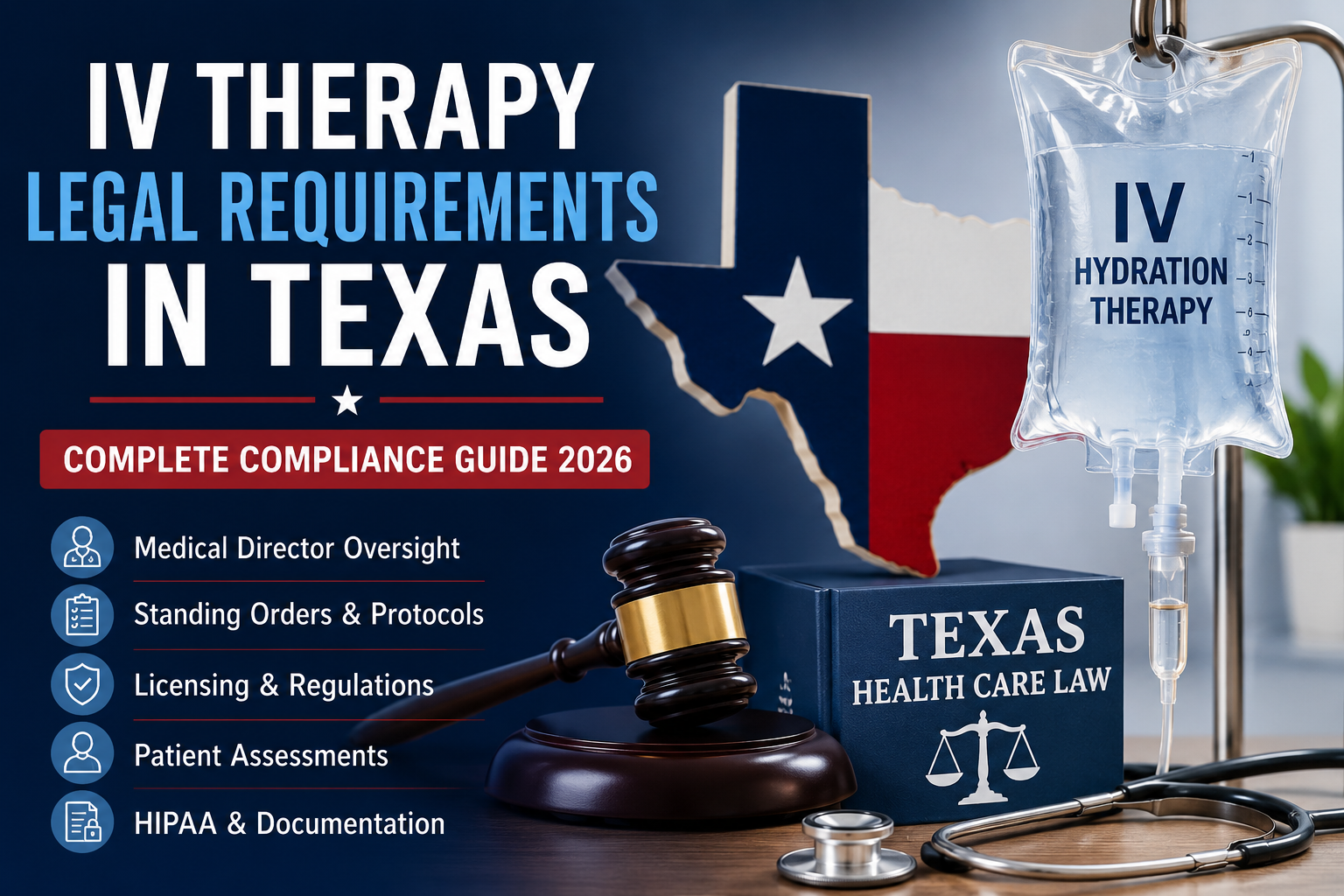
The IV hydration industry continues to grow across the United States, and Texas remains one of the most attractive markets for wellness entrepreneurs, nurses, and healthcare professionals looking to start an IV therapy business. However, before offering IV hydration services, it is crucial to understand the IV therapy legal requirements in Texas.
Texas has specific regulations governing healthcare services, medical oversight, patient safety, and the administration of intravenous treatments. Failure to comply with these requirements can result in fines, legal issues, licensing complications, and business disruptions.
This guide explains the key legal considerations for operating an IV therapy business in Texas in 2026.
Is IV Therapy Legal in Texas?
Yes, IV therapy is legal in Texas when performed under appropriate medical supervision and in compliance with applicable healthcare regulations.
IV hydration businesses must operate within a medical framework that includes:
- Licensed healthcare professionals
- Proper patient evaluations
- Medical director oversight
- Standing orders and protocols
- Accurate documentation
- Compliance with Texas healthcare regulations
Because IV therapy involves administering substances directly into the bloodstream, it is considered a medical procedure and must be treated accordingly.
Do You Need a Medical Director for IV Therapy in Texas?
One of the most important IV therapy legal requirements in Texas is having appropriate physician oversight.
Most IV therapy businesses operate under the supervision of a licensed physician serving as a Medical Director. The Medical Director helps establish treatment protocols, reviews patient care processes, and ensures compliance with applicable healthcare standards.
Responsibilities often include:
- Approving treatment protocols
- Reviewing standing orders
- Providing clinical oversight
- Ensuring patient safety standards
- Supervising delegated medical services
- Maintaining regulatory compliance
A strong physician partnership is often the foundation of a legally compliant IV therapy business.
Who Can Administer IV Therapy in Texas?
IV therapy should only be administered by qualified healthcare professionals operating within their legal scope of practice.
Depending on the business model, IV treatments may be administered by:
- Registered Nurses (RNs)
- Nurse Practitioners (NPs)
- Physicians
- Physician Assistants (PAs)
- Other appropriately licensed healthcare professionals
Business owners should verify all licensing requirements and ensure staff receive proper training before performing IV procedures.
Patient Assessment Requirements
Before administering IV therapy, patients should undergo a comprehensive medical assessment.
Patient evaluations may include:
Medical History Review
Providers should review:
- Existing medical conditions
- Allergies
- Current medications
- Pregnancy status
- Previous reactions to IV treatments
Informed Consent
Patients should receive detailed information regarding:
- Benefits of treatment
- Potential risks
- Available alternatives
- Expected outcomes
Signed consent forms should be maintained in patient records.
Eligibility Screening
Not every patient is an appropriate candidate for IV therapy. Proper screening helps identify contraindications and reduce risk.
Standing Orders and Treatment Protocols
Standing orders are a critical component of legal compliance.
These documents allow authorized healthcare professionals to provide treatments according to physician-approved protocols.
Effective standing orders typically include:
- Approved IV formulations
- Dosage guidelines
- Administration procedures
- Patient eligibility criteria
- Emergency response protocols
- Documentation requirements
Businesses should ensure standing orders are regularly reviewed and updated by their Medical Director.
For IV clinic operators, maintaining clear documentation and protocols is essential for patient safety and regulatory compliance.
Medical Documentation Requirements
Proper documentation is one of the most overlooked aspects of IV therapy compliance.
Records should include:
- Patient intake forms
- Health history questionnaires
- Consent forms
- Treatment notes
- Product lot numbers
- Adverse event reports
- Follow-up documentation
Accurate recordkeeping protects both patients and providers while demonstrating compliance during audits or investigations.
Mobile IV Therapy Legal Considerations in Texas
Mobile IV therapy services have become increasingly popular throughout Texas.
However, mobile providers must meet the same clinical and legal standards as fixed-location clinics.
Key considerations include:
Physician Oversight
Mobile services still require appropriate medical supervision and approved treatment protocols.
HIPAA Compliance
Patient information must remain secure regardless of whether services are provided in a clinic, home, hotel, or workplace.
Emergency Preparedness
Providers should maintain emergency medications, supplies, and response procedures when delivering treatments outside traditional healthcare settings.
Transportation and Storage
IV supplies and medications must be stored and transported according to manufacturer guidelines and applicable regulations.
Business Licensing and Registration
In addition to healthcare compliance requirements, entrepreneurs must satisfy standard business registration obligations.
These may include:
- Business entity formation
- State registrations
- Tax requirements
- Local permits
- Insurance coverage
Requirements vary depending on location and business structure.
Consulting legal and healthcare professionals before opening an IV therapy business can help avoid costly compliance mistakes.
HIPAA and Patient Privacy Compliance
All IV therapy businesses handling patient information should implement strong privacy and security measures.
HIPAA compliance includes:
- Secure patient records
- Protected electronic communications
- Employee privacy training
- Data security policies
- Breach response procedures
Patient trust is a major component of a successful wellness business.
Insurance Requirements for IV Therapy Businesses
Insurance coverage is essential for risk management.
Common policies include:
Professional Liability Insurance
Protects healthcare providers against claims related to patient care.
General Liability Insurance
Provides protection for accidents occurring at the business location.
Workers’ Compensation Insurance
May be required depending on staffing and state regulations.
Cyber Liability Coverage
Helps protect against data breaches and cybersecurity incidents.
Common Compliance Mistakes to Avoid
Many new IV therapy businesses encounter regulatory issues due to preventable mistakes.
Common errors include:
- Operating without adequate physician oversight
- Using outdated standing orders
- Poor patient documentation
- Inadequate informed consent procedures
- Insufficient staff training
- HIPAA violations
- Improper marketing claims
Avoiding these mistakes can help protect your business and reputation.
Best Practices for Operating a Compliant IV Therapy Business in Texas
Successful clinics typically focus on:
- Strong Medical Director relationships
- Detailed treatment protocols
- Comprehensive staff training
- Regular compliance reviews
- Accurate patient documentation
- Ongoing quality assurance
- Professional legal guidance
Compliance should be viewed as an ongoing process rather than a one-time task.
How American IV Supports IV Therapy Businesses
Whether you are launching a new clinic or expanding an existing operation, having access to reliable resources can simplify compliance and business growth.
American IV Association provides educational resources, business tools, documentation templates, professional networking opportunities, and industry guidance designed specifically for IV hydration providers.
Entrepreneurs can also access resources related to:
- Medical Director relationships
- Standing orders
- Compliance documentation
- Business startup planning
- IV therapy education
- Industry best practices
Conclusion
Understanding the IV therapy legal requirements in Texas is essential for building a safe, compliant, and sustainable IV hydration business. From physician oversight and standing orders to patient documentation and HIPAA compliance, every aspect of operations should be carefully structured to meet legal and professional standards.
As regulations and healthcare requirements continue to evolve, business owners should regularly review policies, maintain proper medical oversight, and seek professional legal guidance when necessary. By prioritizing compliance from day one, IV therapy providers can protect their patients, strengthen their reputation, and position their businesses for long-term success.
Frequently Asked Questions
Do I need a Medical Director for an IV therapy business in Texas?
Most IV therapy businesses operate under physician oversight, making a Medical Director an important component of compliant operations.
Can nurses administer IV therapy in Texas?
Qualified nurses may administer IV therapy when acting within their scope of practice and under appropriate medical supervision.
Are standing orders required for IV therapy clinics?
Standing orders are commonly used to establish physician-approved treatment protocols and support compliant patient care.
Can I operate a mobile IV therapy business in Texas?
Yes. Mobile IV therapy services are permitted when providers comply with applicable medical, privacy, and operational requirements.
Is HIPAA compliance required for IV therapy businesses?
Yes. Businesses handling patient health information should implement HIPAA-compliant privacy and security procedures.