
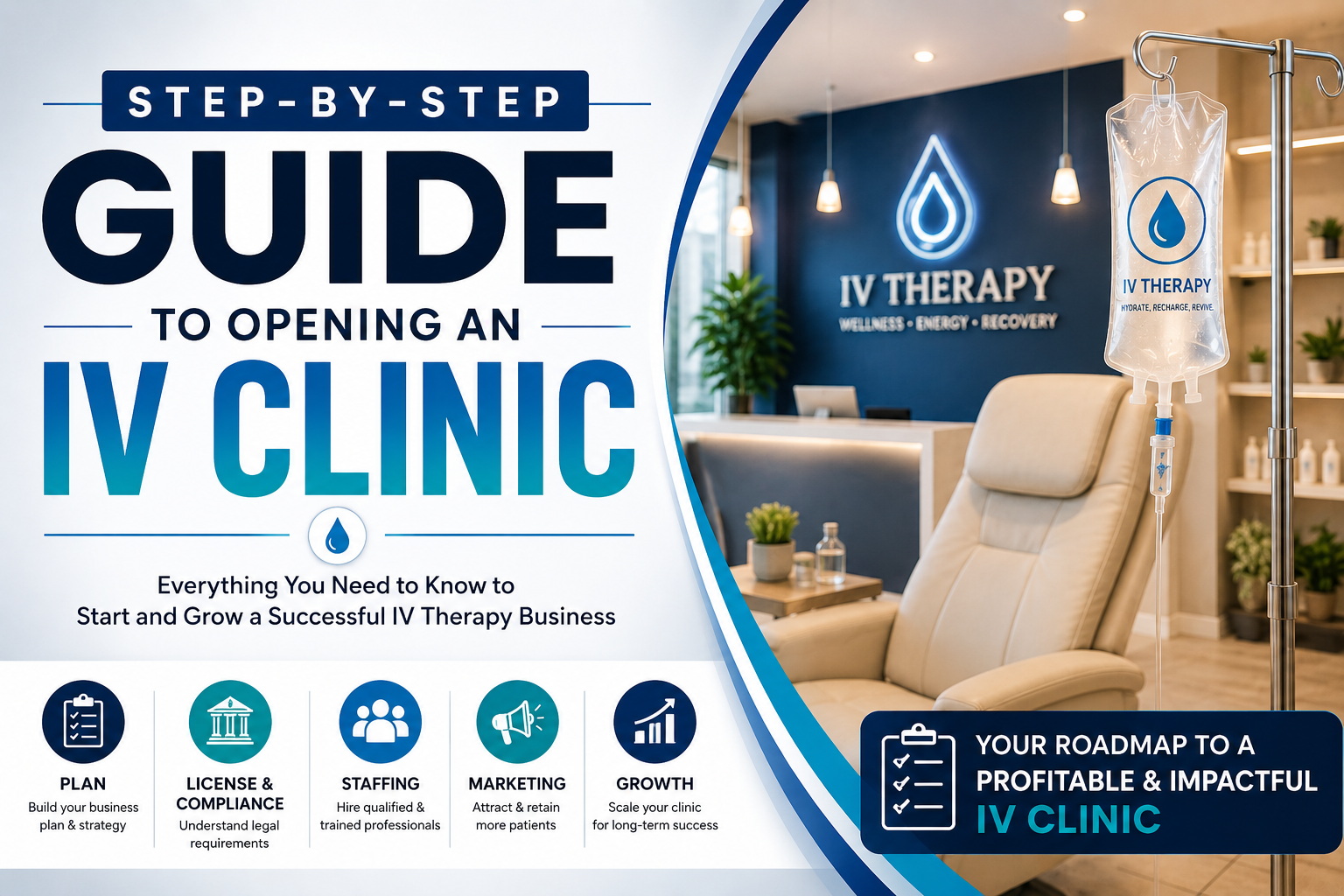
The wellness and preventive healthcare industry has experienced massive growth in recent years, and IV therapy services are now one of the fastest-growing sectors in modern healthcare. From hydration therapy and vitamin infusions to recovery treatments and wellness drips, more patients are turning to IV clinics for fast, convenient, and personalized care. If you are a healthcare professional or entrepreneur looking to enter this industry, understanding the right process is essential before launching your business.
This comprehensive Step-by-Step Guide to Opening an IV Clinic will walk you through everything you need to know—from legal planning and licensing to equipment, staffing, marketing, and patient experience.
Why the IV Therapy Industry Is Growing
IV therapy has evolved far beyond hospital settings. Today, wellness-focused consumers seek treatments that support hydration, immunity, energy, recovery, beauty, and overall health optimization. Athletes, busy professionals, travelers, and wellness-conscious individuals are increasingly investing in these services.
The growing demand has created excellent opportunities for medical professionals, nurse entrepreneurs, and wellness business owners to build profitable and scalable IV therapy businesses.
However, success requires more than simply renting a space and offering infusions. Building a reputable clinic means focusing on compliance, safety, operations, patient care, and long-term branding.
Step 1: Research Your Market and Business Model
Before investing money into equipment or clinic space, start with detailed market research.
Ask yourself:
- Is there demand for IV therapy in your target city?
- Who are your competitors?
- What services are currently missing in your area?
- Will you offer mobile IV therapy, a physical clinic, or both?
- What type of patients are you targeting?
Understanding your audience helps shape your entire business strategy. Some clinics focus on luxury wellness treatments, while others specialize in athlete recovery, chronic fatigue support, or beauty-focused infusions.
You should also evaluate pricing in your local market to understand profit margins and patient expectations.
Step 2: Create a Detailed Business Plan
Every successful clinic begins with a strong business plan. Your plan should clearly define:
Business Goals
Outline your short-term and long-term objectives.
Examples include:
- Opening a single-location wellness clinic
- Expanding to multiple cities
- Launching a mobile IV therapy service
- Building a membership-based patient model
Startup Costs
Estimate expenses such as:
- Clinic lease
- Medical equipment
- Furniture
- Staffing
- Licensing fees
- Insurance
- Marketing
- Technology systems
Revenue Strategy
Decide how your clinic will generate consistent income. Many IV clinics increase recurring revenue through wellness memberships and treatment packages.
A clear financial strategy helps you avoid unnecessary risks during your first year of operation.
If you want a deeper breakdown of startup costs, legal setup, and growth strategies, read our guide on How to Start an IV Therapy Business in 2026.
Step 3: Understand Legal and Medical Requirements
Healthcare businesses operate under strict regulations, and IV clinics are no exception.
One of the most important steps in opening your clinic is ensuring full compliance with state laws and medical regulations.
Requirements may include:
- Medical director agreements
- State nursing regulations
- Standing orders
- Business licensing
- Insurance coverage
- HIPAA compliance
- OSHA standards
Because laws vary by state, working with a healthcare attorney is strongly recommended.
Failing to meet legal requirements can lead to fines, operational shutdowns, or liability risks.
For professional education, industry updates, and compliance resources, learn more about American IV Association and its support for IV therapy professionals.
Step 4: Choose the Right Location
Location plays a major role in clinic success.
When selecting a space, consider:
- Visibility
- Parking availability
- Nearby businesses
- Demographics
- Accessibility
- Interior layout
Many successful IV clinics open near:
- Fitness centers
- Luxury wellness businesses
- Medical offices
- High-income residential areas
- Downtown professional districts
Your clinic environment should feel welcoming, modern, and professional. Patients often associate atmosphere with treatment quality.
Comfortable seating, calming lighting, and clean interiors can significantly improve the patient experience.
Step 5: Form Your Business Entity
You will need to legally register your company before operating.
Common business structures include:
- LLC
- Corporation
- Partnership
Most IV clinic owners choose LLCs because they provide liability protection and flexible taxation.
You should also:
- Apply for an EIN
- Open a business bank account
- Register for state taxes
- Obtain local permits
Consulting with an accountant ensures your business structure aligns with your financial goals.
Step 6: Obtain Insurance Coverage
Insurance is critical in the healthcare industry.
Essential coverage may include:
- General liability insurance
- Professional malpractice insurance
- Workers’ compensation
- Property insurance
- Cybersecurity insurance
The right policies help protect your clinic from unexpected legal and financial risks.
Never underestimate the importance of comprehensive insurance coverage when building a healthcare business.
Step 7: Purchase Equipment and Medical Supplies
Your clinic must be properly equipped to deliver safe and effective treatments.
Basic supplies include:
- IV poles
- Reclining chairs
- Infusion pumps
- Catheters
- Fluids
- Vitamins
- Emergency kits
- Sharps containers
- PPE supplies
Always purchase products from reputable medical suppliers.
You should also establish inventory management systems to track expiration dates and avoid shortages.
Quality equipment directly impacts patient trust and operational efficiency.
Step 8: Build Your Treatment Menu
Creating the right IV therapy menu is essential for attracting patients.
Popular treatment categories include:
Hydration Therapy
Ideal for dehydration recovery and wellness maintenance.
Immunity Support
Vitamin-rich infusions focused on immune system support.
Energy and Performance
Popular among professionals, athletes, and active individuals.
Beauty and Skin Health
Infusions designed to support skin appearance and wellness goals.
Recovery Treatments
Often used after travel, workouts, illness, or events.
Keep your menu simple in the beginning. Expanding too quickly can complicate operations and inventory management.
Focus first on treatments with strong demand and consistent profitability.
Step 9: Hire Qualified Staff
Patient safety depends on hiring skilled professionals.
Depending on your clinic model, your team may include:
- Registered nurses
- Nurse practitioners
- Medical assistants
- Front desk coordinators
- Physicians
- Marketing staff
Beyond credentials, prioritize customer service skills. Patients expect professionalism, empathy, and clear communication.
A friendly and knowledgeable team can significantly improve patient retention and online reviews.
Step 10: Invest in Training and Protocols
Consistent training is one of the most overlooked aspects of running a successful IV clinic.
Your team should be trained in:
- IV insertion techniques
- Emergency procedures
- Infection control
- Patient documentation
- Treatment protocols
- Customer service standards
Clear operational systems help reduce errors and improve efficiency.
Standardized protocols also make it easier to scale your clinic in the future.
Step 11: Set Up Technology Systems
Modern healthcare businesses rely heavily on technology.
Your clinic should implement:
- Electronic medical records (EMR)
- Online booking systems
- Payment processing
- Patient intake forms
- HIPAA-compliant communication tools
Convenient scheduling and digital forms improve patient experience and reduce administrative work.
Automation can save your team significant time while increasing operational accuracy.
Step 12: Build a Strong Brand Identity
Branding is one of the biggest differentiators in the wellness industry.
Your clinic should have:
- A professional logo
- Consistent colors and design
- A modern website
- Social media presence
- Clear messaging
Patients are more likely to trust clinics with professional branding and educational content.
Your website should clearly explain:
- Services
- Pricing
- Safety standards
- Team credentials
- Booking process
Strong branding helps establish credibility in a competitive market.
Step 13: Create a Marketing Strategy
Opening your clinic is only the beginning. Marketing is what drives patient growth.
Effective strategies include:
Local SEO
Optimize your website for local searches so nearby patients can find your services online.
Social Media Marketing
Share educational content, wellness tips, clinic updates, and patient experiences.
Google Business Profile
Maintain updated hours, photos, and reviews.
Influencer Partnerships
Collaborating with local wellness influencers can increase brand awareness.
Referral Programs
Reward existing patients for bringing in new clients.
Consistent marketing helps build long-term patient trust and visibility.
Step 14: Focus on Patient Experience
The patient experience can determine whether your clinic thrives or struggles.
Patients value:
- Fast booking
- Minimal wait times
- Friendly staff
- Comfortable environments
- Transparent pricing
- Personalized care
Small details matter.
Offering refreshments, comfortable seating, and post-treatment follow-up messages can create a memorable experience that encourages repeat visits.
Step 15: Monitor Growth and Scale Strategically
Once your clinic is operational, focus on tracking performance metrics.
Monitor:
- Monthly revenue
- Patient retention
- Treatment popularity
- Marketing ROI
- Online reviews
- Membership growth
Data-driven decisions help identify areas for improvement and future expansion opportunities.
As your clinic grows, you may consider:
- Adding mobile services
- Opening additional locations
- Expanding treatment options
- Launching corporate wellness programs
Sustainable growth requires careful planning and operational consistency.
Common Mistakes to Avoid
Many new clinic owners make avoidable mistakes during the launch phase.
Common issues include:
- Ignoring state regulations
- Underestimating startup costs
- Hiring inexperienced staff
- Poor inventory management
- Weak branding
- Lack of marketing strategy
- Inconsistent patient experience
Learning from these mistakes early can save significant time and money.
Final Thoughts
Launching a wellness business in today’s healthcare industry can be both exciting and profitable when approached strategically. This Step-by-Step Guide to Opening an IV Clinic highlights the importance of planning, compliance, patient care, branding, and operational systems.
Success does not happen overnight. Building a trusted clinic requires dedication, proper training, excellent service, and a long-term growth mindset. Whether you plan to open a boutique wellness lounge or a large multi-location practice, focusing on quality and professionalism will help your clinic stand out in a competitive market.
With the right foundation, your IV therapy clinic can become a trusted destination for wellness-focused patients while creating long-term business opportunities in the growing healthcare industry.
New clinic owners can streamline their launch process with the IV Hydration Therapy Checklist – New Startup designed specifically for IV therapy businesses and wellness startups.
Ready to Launch Your IV Therapy Business?
Starting an IV clinic requires the right strategy, compliance knowledge, and industry support. Whether you are building a mobile IV business or opening a wellness lounge, having expert guidance can help you grow faster and avoid costly mistakes.
Visit American IV to access professional resources, IV therapy education, business support, certifications, and tools designed to help modern IV clinic owners succeed in 2026 and beyond.