
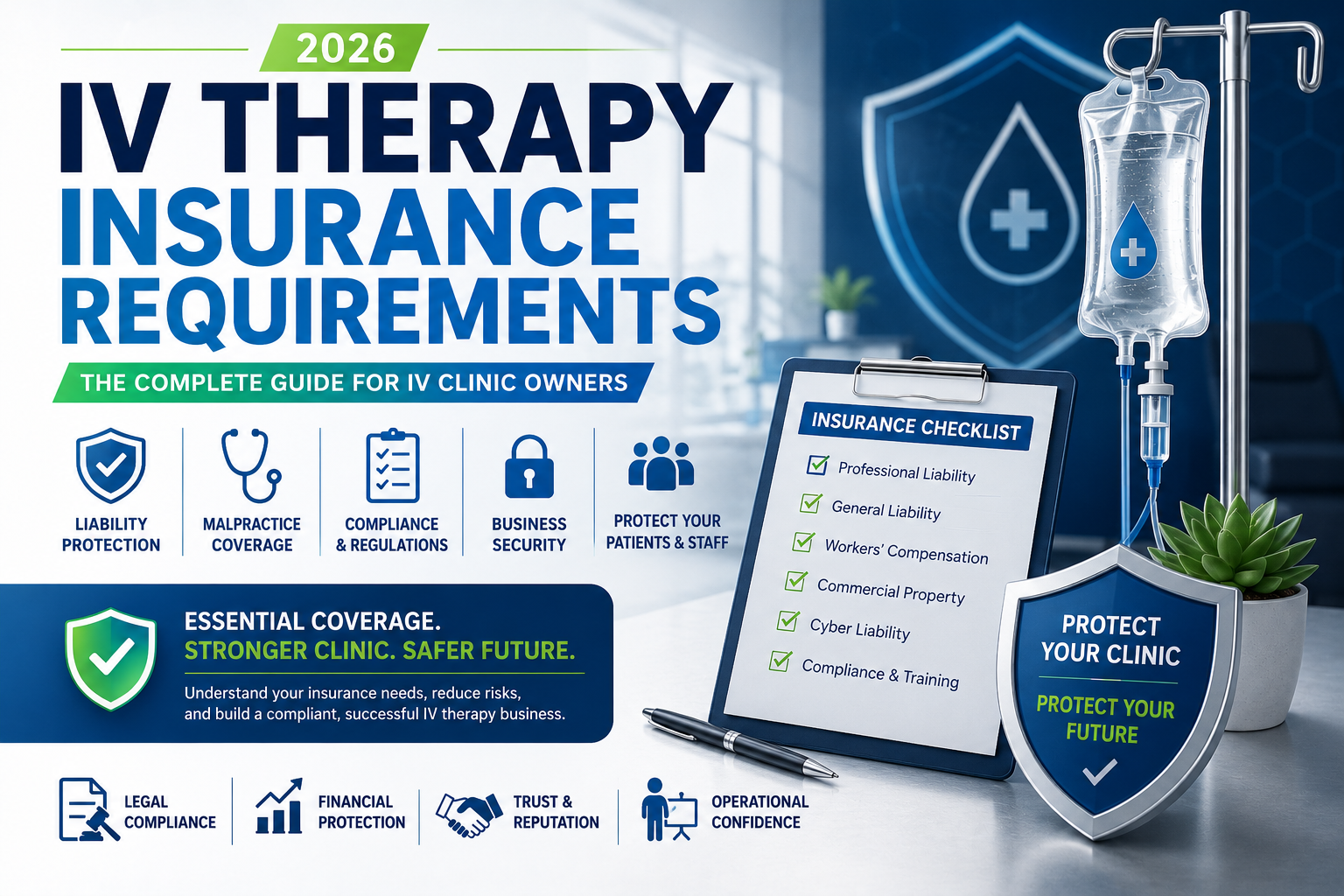
As the IV therapy industry continues to expand across the United States, clinic owners face increasing responsibility for patient safety, regulatory compliance, and risk management. Whether you operate a brick-and-mortar IV hydration clinic, a mobile IV therapy business, or are planning to launch a new venture, understanding IV therapy insurance requirements is essential.
Insurance serves as a critical safeguard against financial losses resulting from patient injuries, professional errors, property damage, employee incidents, and cyber threats. While some insurance policies may be legally required depending on your state and business structure, others are considered industry best practices that can help protect your business from potentially devastating lawsuits.
This guide explains IV therapy insurance requirements, the types of coverage IV clinics should consider, common industry risks, compliance considerations, and practical strategies for reducing liability while building a sustainable business.
Why IV Therapy Clinics Need Insurance Coverage
IV therapy involves administering fluids, vitamins, minerals, and medications directly into a patient’s bloodstream. Although these treatments are generally safe when performed correctly, they still carry inherent medical risks.
Potential complications include:
- Adverse reactions to ingredients
- IV infiltration or extravasation
- Infection at the insertion site
- Allergic reactions
- Documentation errors
- Improper patient screening
- Falls and injuries within the clinic
- Privacy and data security breaches
Without appropriate insurance coverage, even a single claim could result in significant legal expenses, settlement costs, and reputational damage.
Insurance helps protect:
- Business assets
- Clinic owners
- Medical directors
- Nurses and healthcare providers
- Employees
- Patients
- Company reputation
Are There Legal IV Therapy Insurance Requirements?
One of the most common questions among clinic owners is whether insurance is legally required.
The answer depends on several factors:
- State regulations
- Business structure
- Services provided
- Number of employees
- Mobile versus fixed-location operations
Most states do not specifically mandate a unique “IV therapy insurance policy.” However, various insurance requirements may apply through healthcare regulations, business licensing laws, employment laws, and contractual obligations.
State Licensing and Regulatory Expectations
Healthcare regulators often expect providers to maintain sufficient professional liability coverage to ensure patients have financial recourse if negligence occurs.
Additionally, many states require:
- Workers’ compensation insurance for employees
- Commercial auto insurance for business vehicles
- Certain malpractice coverage levels for licensed practitioners
Because regulations vary by state, clinic owners should consult legal counsel and insurance professionals familiar with healthcare compliance.
Medical Director Requirements
Many IV therapy businesses operate under physician supervision through a medical director arrangement.
Medical directors often require proof of:
- Professional liability insurance
- General liability coverage
- Compliance protocols
- Proper documentation procedures
Failure to maintain adequate coverage may violate contractual agreements and increase legal exposure.
Essential Insurance Policies for IV Therapy Businesses
Understanding IV therapy insurance requirements begins with identifying the core policies most clinics need.
Professional Liability Insurance (Medical Malpractice Insurance)
Professional liability insurance is often the most important policy for IV therapy providers.
This coverage protects against claims involving:
- Medical negligence
- Treatment errors
- Misdiagnosis
- Failure to obtain informed consent
- Improper patient assessment
- Documentation mistakes
Examples of Covered Claims
A patient experiences complications after receiving an IV infusion and alleges inadequate screening.
A nurse administers the wrong formulation due to a documentation error.
A patient claims the provider failed to disclose treatment risks adequately.
Professional liability insurance helps cover:
- Legal defense costs
- Court expenses
- Settlements
- Judgments
General Liability Insurance
General liability insurance protects against non-medical claims involving third parties.
Coverage may include:
- Slip-and-fall accidents
- Property damage
- Bodily injury
- Advertising injury claims
For example, if a patient slips on a wet floor in your clinic lobby, general liability insurance may help cover resulting expenses.
Business Owner’s Policy (BOP)
A Business Owner’s Policy combines several important protections into one package.
Typically, a BOP includes:
- General liability insurance
- Commercial property insurance
- Business interruption coverage
This option is often cost-effective for small and medium-sized IV therapy businesses.
Workers’ Compensation Insurance
If your clinic employs nurses, administrative staff, medical assistants, or other personnel, workers’ compensation insurance may be legally required.
Workers’ compensation helps cover:
- Medical expenses
- Lost wages
- Rehabilitation costs
- Workplace injury claims
Requirements vary by state, but most employers are obligated to carry coverage once they hire employees.
Cyber Liability Insurance
Modern IV clinics rely heavily on electronic systems and patient data.
Cyber liability insurance helps protect against:
- Data breaches
- Ransomware attacks
- HIPAA-related incidents
- Electronic record compromise
- Notification costs
As healthcare cyber threats continue to rise, this coverage is becoming increasingly important.
Insurance Requirements for Mobile IV Therapy Businesses
Mobile IV therapy companies face additional risks compared to traditional clinics.
Because services are provided at homes, hotels, offices, and events, mobile businesses should consider expanded coverage.
Commercial Auto Insurance
Personal auto insurance generally does not cover business-related activities.
Commercial auto insurance may help cover:
- Vehicle accidents
- Property damage
- Bodily injury claims
- Transportation-related liability
Mobile Equipment Coverage
Portable IV equipment can be expensive to replace.
Equipment coverage helps protect:
- Infusion pumps
- Medical supplies
- Portable diagnostic devices
- Inventory
Increased Liability Exposure
Mobile providers encounter unfamiliar environments that may increase risks.
Insurance carriers often evaluate:
- Travel radius
- Service locations
- Number of providers
- Treatment complexity
Insurance Requirements for Nurses Starting an IV Therapy Business
Many entrepreneurs ask whether nurses can start and operate IV therapy businesses.
The answer depends on state laws and scope-of-practice regulations.
Regardless of ownership structure, insurance remains essential.
Nurse-owned IV businesses should strongly consider:
- Professional liability insurance
- General liability insurance
- Workers’ compensation coverage
- Cyber liability insurance
- Commercial auto insurance if mobile services are offered
In many states, physician oversight and medical director agreements remain necessary.
Insurance requirements may also be outlined within collaborative agreements or supervisory arrangements.
How Much Insurance Coverage Does an IV Therapy Clinic Need?
Coverage needs vary depending on business size and risk exposure.
Factors affecting coverage limits include:
- Annual revenue
- Number of providers
- Patient volume
- Treatment offerings
- Geographic location
- Mobile services
Common Coverage Ranges
Many clinics consider:
- $1 million per occurrence professional liability coverage
- $3 million aggregate professional liability coverage
- $1 million general liability coverage
However, higher-risk businesses may require larger limits.
Consulting a healthcare-focused insurance advisor is recommended when determining appropriate coverage.
Factors That Affect IV Therapy Insurance Costs
Insurance premiums vary widely.
Key factors include:
Clinic Size
Larger clinics generally pay higher premiums due to increased exposure.
Services Offered
Clinics administering medications may face different underwriting considerations than wellness-focused hydration businesses.
Number of Providers
More providers typically increase overall risk exposure.
Claims History
Previous lawsuits or insurance claims can significantly impact premiums.
Geographic Location
State regulations, litigation trends, and local healthcare environments affect pricing.
Mobile Operations
Travel-related risks may increase insurance costs.
Common Insurance Claims in the IV Therapy Industry
Understanding common claims can help clinic owners strengthen risk management programs.
IV Infiltration Injuries
Improper catheter placement may lead to tissue damage and patient complaints.
Adverse Reactions
Unexpected reactions to vitamins, medications, or additives can result in claims.
Documentation Errors
Incomplete or inaccurate records frequently create legal challenges.
Patient Falls
Slip-and-fall incidents remain a leading source of liability claims.
Privacy Violations
Unauthorized disclosure of patient information can trigger regulatory and legal consequences.
Risk Management Strategies to Reduce Liability
Insurance is only one part of a comprehensive risk management plan.
Implement Thorough Patient Screening
Providers should review:
- Medical history
- Allergies
- Current medications
- Contraindications
Proper screening reduces treatment-related risks.
Maintain Detailed Documentation
Documentation should include:
- Patient assessments
- Informed consent
- Treatment details
- Follow-up notes
Accurate records often become crucial evidence during disputes.
Invest in Staff Training
Regular training helps ensure:
- Clinical competency
- Regulatory compliance
- Consistent treatment protocols
Utilize Standing Orders and Medical Protocols
Clear standing orders help standardize care and reduce variability.
Protocols should be reviewed regularly by medical directors.
Conduct Internal Audits
Routine audits identify compliance gaps before they become larger problems.
Choosing the Right Insurance Provider
Not all insurers understand the unique risks associated with IV therapy businesses.
When evaluating providers, ask:
- Do you specialize in healthcare businesses?
- Do you insure IV hydration clinics?
- What exclusions apply?
- Are telehealth services covered?
- Are mobile services covered?
- Is cyber liability included?
- What are the policy limits?
Obtaining multiple quotes can help compare coverage and costs.
Insurance Compliance Best Practices for IV Clinics
Maintaining compliance requires ongoing attention.
Best practices include:
Review Policies Annually
Business growth may create new insurance needs.
Verify Staff Credentials
Ensure licenses and certifications remain current.
Update Risk Management Procedures
Protocols should evolve alongside regulatory changes.
Maintain HIPAA Compliance
Protecting patient information remains essential for reducing liability.
Document Incidents Promptly
Timely reporting helps preserve evidence and improve claim outcomes.
Frequently Asked Questions
Is malpractice insurance required for IV therapy clinics?
While not always legally required, malpractice insurance is strongly recommended and may be required by contracts, medical directors, or healthcare facilities.
How much does IV therapy insurance cost?
Costs vary based on location, services, staffing, claims history, and coverage limits.
Do mobile IV businesses need special insurance?
Yes. Mobile providers often need commercial auto insurance and expanded liability protection.
Does general liability insurance cover medical mistakes?
No. Medical mistakes are generally covered under professional liability or malpractice insurance.
What is the most important insurance policy for an IV clinic?
Professional liability insurance is typically considered the most critical coverage because it protects against treatment-related claims.
Does cyber insurance cover HIPAA violations?
Coverage varies by policy, but many cyber liability policies provide assistance with breach response and regulatory issues.
Conclusion
Understanding IV therapy insurance requirements is a critical step toward building a compliant, sustainable, and financially protected IV therapy business. While specific requirements vary by state and business model, most clinics benefit from a combination of professional liability, general liability, workers’ compensation, cyber liability, and commercial auto insurance.
Insurance should not be viewed merely as a regulatory obligation—it is an investment in long-term business stability. By combining comprehensive coverage with strong documentation practices, staff training, standing orders, and effective risk management protocols, IV therapy clinic owners can better protect their patients, providers, and organizations while positioning themselves for sustainable growth in 2026 and beyond.