
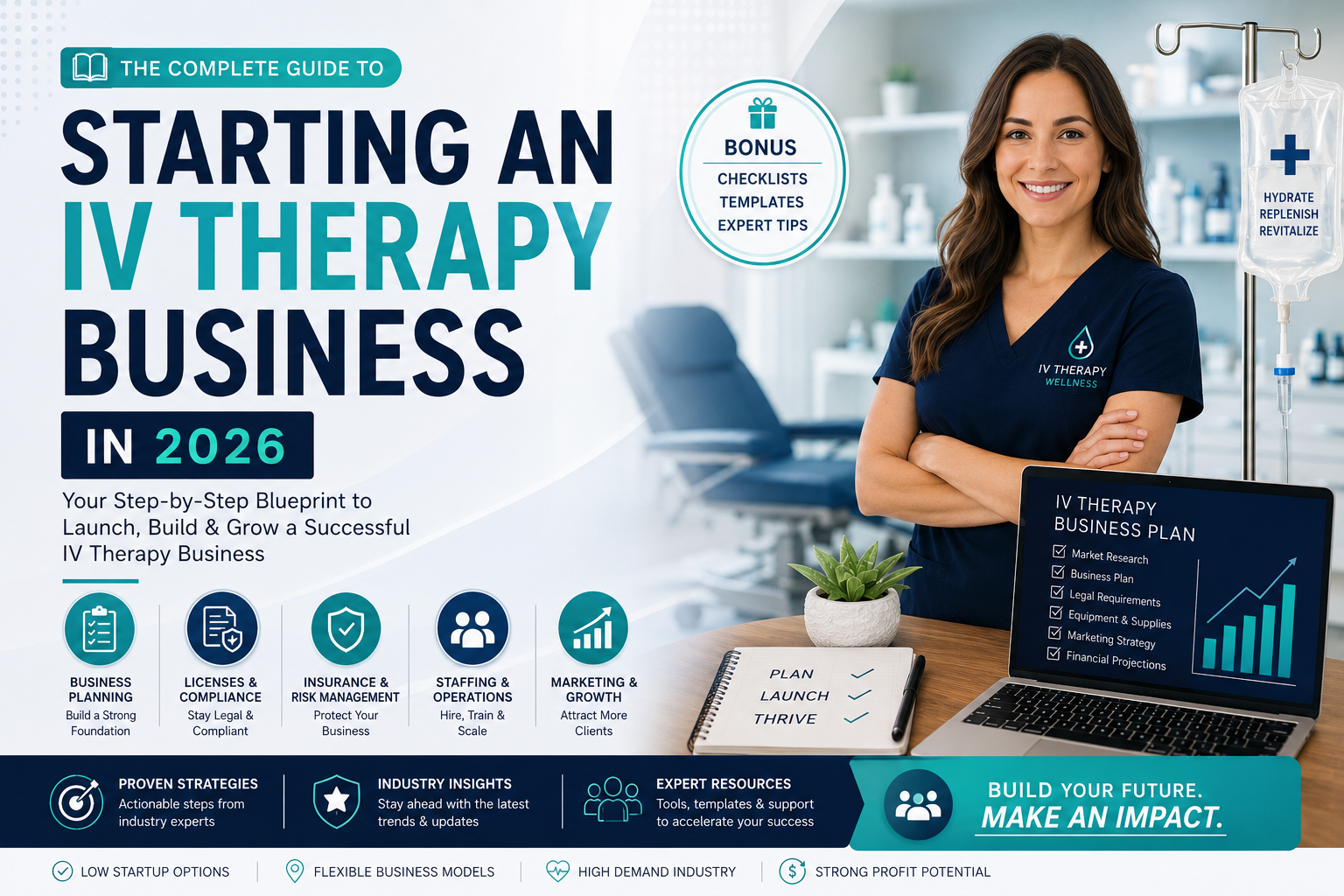
The IV therapy industry has experienced remarkable growth over the past decade, driven by increasing consumer interest in wellness, preventative healthcare, hydration therapy, athletic recovery, and vitamin infusion treatments. As demand continues to rise, many healthcare professionals, entrepreneurs, and wellness providers are exploring how to start an IV therapy business and build a successful clinic.
While the opportunity is significant, launching an IV therapy business requires more than medical knowledge. Business owners must understand licensing requirements, state regulations, insurance, compliance, staffing, marketing, financial planning, and patient safety. A strong foundation is essential for long-term success in this rapidly evolving healthcare sector.
Whether you’re planning a mobile IV therapy service or a brick-and-mortar wellness clinic, this comprehensive guide will walk you through every major step involved in starting, managing, and growing a compliant and profitable IV therapy business in 2026.
👉 Ready to build your IV therapy business with confidence?
Why Start an IV Therapy Business in 2026?
The IV therapy market continues to expand as consumers increasingly prioritize wellness, preventive care, and convenient healthcare services. IV hydration and nutrient therapies are now offered in a wide range of settings, including wellness clinics, medical spas, recovery centers, concierge healthcare practices, and mobile businesses.
Growing demand is being driven by several factors:
- Increased focus on preventative health
- Rising interest in wellness and longevity
- Growth of concierge healthcare
- Expansion of mobile healthcare services
- Increased awareness of hydration therapy
- Demand from athletes and busy professionals
- Aging populations seeking wellness solutions
For entrepreneurs and licensed healthcare providers, these trends create an opportunity to build a business that combines clinical expertise with long-term growth potential.
Is an IV Therapy Business Right for You?
Before investing in equipment and opening a clinic, evaluate whether this business aligns with your experience, goals, and resources.
An IV therapy business may be a good fit if you:
- Are a licensed healthcare professional or plan to work with qualified clinical staff
- Enjoy providing patient-centered care
- Have strong business and leadership skills
- Are willing to learn healthcare regulations and compliance requirements
- Can invest in ongoing education and staff development
- Want to build a scalable healthcare business
Successful clinic owners balance excellent patient care with strong operational systems, regulatory awareness, and sound financial management.
Understanding the Different IV Therapy Business Models
Choosing the right business model is one of the first decisions you’ll make, and it significantly influences your startup costs, staffing, operations, and marketing strategy.
Mobile IV Therapy Business
A mobile IV therapy business delivers treatments at patients’ homes, hotels, workplaces, or special events.
Benefits
- Lower startup costs
- Reduced overhead expenses
- Flexible scheduling
- Convenient for patients
- Easier to launch with limited capital
Challenges
- Vehicle expenses
- Travel time between appointments
- Mobile equipment storage
- Commercial auto insurance
- Scheduling logistics
- State-specific regulations for mobile healthcare
This model is often attractive for entrepreneurs seeking a lower-cost entry into the market.
Brick-and-Mortar IV Therapy Clinic
A physical clinic provides treatments from a dedicated healthcare or wellness facility.
Benefits
- Professional treatment environment
- Higher patient capacity
- Greater brand visibility
- Easier expansion into additional services
- More consistent patient experience
Challenges
- Higher startup costs
- Lease or mortgage expenses
- Facility maintenance
- Utility costs
- Larger staffing requirements
A physical clinic generally requires a larger investment but may offer greater opportunities for long-term growth and service expansion.
Mobile vs. Brick-and-Mortar: Which Is Better?
| Feature | Mobile IV Therapy | Physical Clinic |
|---|---|---|
| Startup Investment | Lower | Higher |
| Monthly Overhead | Lower | Higher |
| Patient Convenience | Excellent | Good |
| Brand Visibility | Moderate | High |
| Expansion Opportunities | Moderate | Excellent |
| Facility Costs | Minimal | Significant |
The right choice depends on your budget, local demand, business goals, and preferred operational model.
Step 1: Research Your Market
Every successful IV therapy business begins with a thorough understanding of the local market.
Key questions to consider include:
- Who are your target patients?
- What services are competitors offering?
- What are the average local prices?
- Is there demand for mobile services?
- Are there underserved areas?
- What partnerships can you build with local healthcare providers or wellness businesses?
Conducting market research helps you identify opportunities, differentiate your services, and create a sustainable business strategy.
Step 2: Develop a Comprehensive Business Plan
A business plan serves as the roadmap for your clinic. It can also be essential if you plan to seek financing or attract investors.
Your business plan should include:
- Executive summary
- Business objectives
- Market analysis
- Services offered
- Pricing strategy
- Marketing plan
- Financial projections
- Startup budget
- Operational workflow
- Risk management strategy
- Growth plan
A well-developed business plan helps you make informed decisions and measure progress as your business grows.
Step 3: Estimate Your Startup Costs
Understanding startup costs is critical before launching your clinic.
Below is a general estimate of common startup expenses:
Step 4: Register Your Business
Selecting the appropriate legal structure is an important step in protecting your business and meeting regulatory requirements.
Common business structures include:
- Sole Proprietorship
- Limited Liability Company (LLC)
- Corporation
- Partnership
Many clinic owners choose an LLC because it may provide liability protection while offering operational flexibility. Consult qualified legal and tax professionals to determine the best structure for your situation.
Business registration typically includes:
- Registering your business name
- Obtaining an Employer Identification Number (EIN)
- Applying for state and local licenses
- Opening a business bank account
- Setting up accounting systems
Build Your Business on a Strong Foundation
Launching an IV therapy clinic involves more than opening your doors. Long-term success depends on staying informed about industry standards, compliance expectations, and operational best practices.
AIVA Membership provides educational resources, accreditation guidance, compliance support, networking opportunities, and business development tools designed to help IV therapy professionals build stronger businesses with confidence.
Why American IV Association (AIVA) Supports IV Therapy Business Owners
Starting and growing an IV therapy business requires more than clinical expertise. Business owners must stay informed about changing regulations, patient safety standards, operational best practices, and industry trends.
The American IV Association (AIVA) is dedicated to supporting IV therapy professionals throughout every stage of their business journey. Whether you’re launching your first clinic or expanding an established practice, AIVA provides valuable resources to help you build a stronger, safer, and more successful business.
Benefits of AIVA Membership include:
- Educational resources designed for IV therapy professionals
- Compliance guidance and industry best practices
- Accreditation information and support
- Professional networking opportunities
- Webinars and continuing education
- Business development resources
- Industry news and regulatory updates
- Access to trusted vendors and professional partnerships
Joining a professional association can help you stay informed, strengthen your operations, and continue growing in an evolving healthcare industry.
👉 Ready to launch and grow your IV therapy business with confidence?
Become an AIVA Member to access educational resources, compliance guidance, accreditation support, networking opportunities, and professional tools designed to help IV therapy businesses succeed.
IV Therapy Business Startup Checklist
Before opening your clinic, confirm you’ve completed the following:
✅ Conduct market research
✅ Create a business plan
✅ Register your business
✅ Obtain required licenses and permits
✅ Understand your state’s legal requirements
✅ Secure a medical director (if required)
✅ Purchase appropriate business insurance
✅ Choose a business location or mobile model
✅ Purchase medical equipment and supplies
✅ Hire qualified healthcare professionals
✅ Implement HIPAA-compliant software
✅ Develop policies and standard operating procedures (SOPs)
✅ Build your website and online presence
✅ Launch your marketing strategy
✅ Join a professional association for ongoing education and support
Common Mistakes New IV Therapy Business Owners Should Avoid
Launching an IV therapy clinic is exciting, but many entrepreneurs make avoidable mistakes that can slow growth or create compliance challenges.
Some of the most common include:
- Underestimating startup costs
- Failing to understand state regulations
- Operating without appropriate insurance coverage
- Inadequate documentation procedures
- Delaying staff training
- Overlooking HIPAA and patient privacy requirements
- Purchasing unnecessary equipment
- Neglecting digital marketing and local SEO
- Operating without written policies and procedures
- Waiting too long to seek professional guidance
Avoiding these mistakes can save time, reduce financial risk, and help create a stronger foundation for long-term success.
Final Thoughts
Learning how to start an IV therapy business is only the first step toward building a successful clinic. Long-term success requires thoughtful planning, financial preparation, regulatory awareness, quality patient care, and a commitment to continuous improvement.
From choosing the right business model and estimating startup costs to obtaining insurance, maintaining compliance, hiring qualified staff, and implementing effective marketing strategies, every decision contributes to the strength of your business.
As the IV therapy industry continues to evolve, successful clinic owners are those who invest in education, follow industry best practices, and build trusted professional relationships. Taking the time to prepare today can help create a more sustainable, compliant, and profitable business tomorrow.
Ready to Start Your IV Therapy Business?
Whether you’re planning a mobile IV therapy service or opening a full-service wellness clinic, you don’t have to navigate the process alone.
👉 Join the American IV Association (AIVA) to gain access to educational resources, compliance guidance, accreditation support, industry updates, networking opportunities, and professional tools that help IV therapy business owners launch, operate, and grow with confidence.
Frequently Asked Questions (FAQs)
1. How much does it cost to start an IV therapy business?
Startup costs vary depending on your business model, location, staffing, and equipment. Mobile IV therapy businesses generally require a lower investment than brick-and-mortar clinics.
2. Can a nurse start an IV therapy business?
In many states, registered nurses and nurse practitioners can own or operate an IV therapy business, although ownership rules and scope-of-practice requirements vary. Always review your state’s regulations before launching.
3. Do I need a medical director?
Many states require IV therapy businesses to work with a licensed medical director who provides oversight for clinical services. Requirements vary by state.
4. What licenses are required to open an IV therapy clinic?
Licensing requirements differ by state and may include business registration, healthcare licensing, local permits, and other regulatory approvals.
5. Is a mobile IV therapy business less expensive than a physical clinic?
Generally, yes. Mobile IV therapy businesses often have lower startup costs because they avoid many facility-related expenses such as commercial leases and extensive build-outs.
6. What type of insurance does an IV therapy business need?
Many clinics consider Professional Liability Insurance, General Liability Insurance, Commercial Property Insurance, Workers’ Compensation (where required), Cyber Liability Insurance, and Commercial Auto Insurance for mobile services.
7. How long does it take to start an IV therapy business?
The timeline depends on licensing, business registration, securing a location, staffing, and equipment procurement. Many businesses require several weeks to several months before opening.
8. What equipment is needed to start an IV therapy business?
Common equipment includes infusion chairs, IV pumps, refrigeration units, medical carts, vital sign monitors, emergency supplies, and other clinical essentials based on your services.
9. How can I attract patients to my IV therapy clinic?
Successful clinics often combine local SEO, a professional website, online scheduling, patient reviews, referral partnerships, social media, email marketing, and community outreach to attract and retain patients.
10. How can AIVA help me start and grow my IV therapy business?
The American IV Association (AIVA) provides educational resources, compliance guidance, accreditation support, industry updates, networking opportunities, and business development tools to help IV therapy professionals build successful and sustainable practices.