
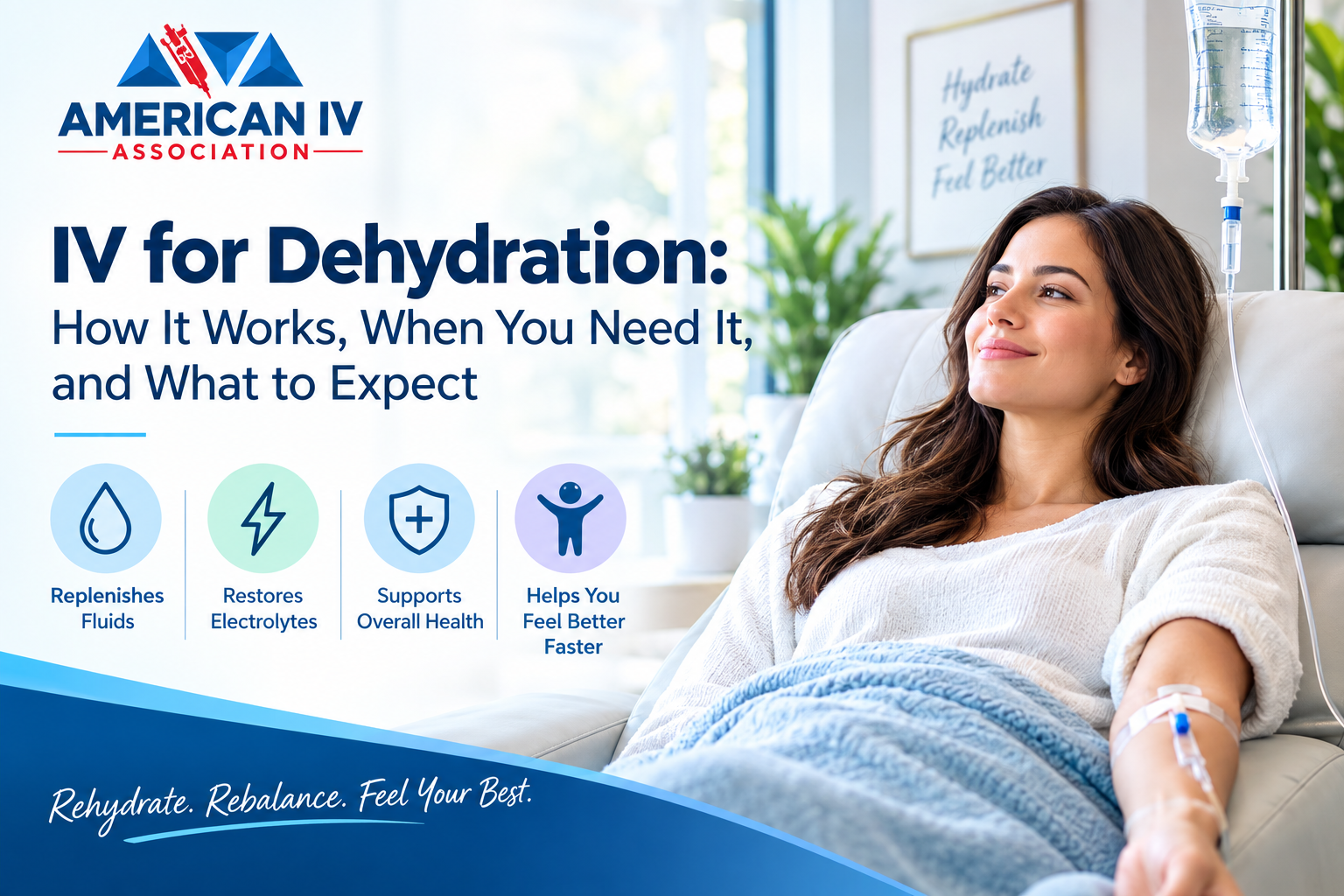
Dehydration can sneak up on you fast. A long run in the heat, a stomach bug that won’t quit, a night of one too many drinks, intense travel, or simply forgetting to drink enough water during a busy day — and suddenly you’re dizzy, foggy, and running on empty. When drinking fluids on your own isn’t cutting it, IV therapy for dehydration is one of the fastest, most effective ways to get your body back on track.
In this guide, we’ll cover exactly how IV hydration works, who it’s for, what to expect during treatment, what it costs, and how to know when it’s the right choice for you.
What Is IV Hydration Therapy?
IV hydration therapy — also called a hydration drip, IV drip therapy, or IV fluid therapy — delivers fluids directly into your bloodstream through a small needle placed in a vein, usually in your arm or hand. The base solution is typically sterile saline (saltwater), often enhanced with electrolytes, vitamins, and minerals tailored to your symptoms.
Because the fluid bypasses your digestive system entirely, it’s absorbed almost immediately. This is what makes an IV drip for dehydration so much faster and more reliable than sipping water or sports drinks when your body is significantly depleted.
Why IV Fluids Work Faster Than Drinking Water
When you drink water, it has to pass through your stomach and intestines before reaching your bloodstream. If you’re already dehydrated — or dealing with nausea, vomiting, or diarrhea — your digestive system may be sluggish, and absorption can be slow or incomplete.
Intravenous rehydration skips that entire process. Fluids and electrolytes go straight into circulation, which means:
- Rehydration happens in minutes, not hours
- Electrolyte balance (sodium, potassium, magnesium) is restored with precision
- It works even when you can’t keep fluids down orally
- Nutrient and vitamin absorption is close to 100%, compared to a fraction absorbed orally
According to the CDC, oral rehydration is sufficient for most mild dehydration, but more severe fluid loss — especially from vomiting, diarrhea, or heat illness — often requires direct intravenous replacement to restore fluid and electrolyte balance quickly and safely.
Common Reasons People Seek Dehydration IV Therapy
- Illness — vomiting, diarrhea, or fever causing rapid fluid loss
- Heat exhaustion or heavy sweating — from exercise, outdoor work, or hot climates
- Hangover recovery — alcohol is a diuretic that depletes fluids and electrolytes
- Athletic performance and recovery — endurance training, competition, or intense workouts
- Post-surgical recovery
- Chronic conditions affecting fluid balance, under a doctor’s guidance
- Jet lag and travel fatigue, often worsened by dehydration on flights
- Migraine and headache relief, frequently linked to fluid loss
Signs You Might Need an IV Drip (Not Just a Glass of Water)
Mild dehydration usually responds well to drinking fluids. But certain dehydration symptoms suggest your body needs more direct help:
- Persistent dizziness or lightheadedness
- Rapid heart rate
- Dry mouth combined with little or no urination
- Confusion or extreme fatigue
- Inability to keep water down due to vomiting
- Dark yellow urine that doesn’t improve after drinking fluids
- Headache that won’t resolve with rest or oral fluids
If you’re experiencing severe symptoms — confusion, fainting, very low urine output, or a rapid heartbeat — seek emergency medical care rather than a wellness IV clinic, as these can signal serious dehydration requiring urgent evaluation.
What Happens During an IV Hydration Session
- Quick health screening — A nurse or provider reviews your symptoms, medical history, and hydration goals.
- IV placement — A small, sterile needle is inserted into a vein, usually in your arm.
- Fluid administration — The drip runs over roughly 30–60 minutes, depending on volume and any added vitamins or medications.
- Monitoring — You’re checked periodically throughout for comfort and any reaction.
- Aftercare — Most people feel noticeably better within the hour and can resume normal activity right away.
Many people describe the experience as relaxing — you can sit back, scroll your phone, or just rest while your body rehydrates.
What’s In an IV Hydration Bag?
Depending on the reason for your visit, a hydration IV may include:
- Electrolytes (sodium, potassium, magnesium) to restore mineral balance
- B-complex vitamins for energy support
- Vitamin C for immune support
- Anti-nausea or anti-inflammatory medication, when appropriate and administered by a licensed provider
- Antioxidants like glutathione, sometimes added for recovery-focused drips
Is IV Hydration Safe?
For most healthy adults, IV hydration therapy is low-risk when administered by a licensed medical professional in a clean, controlled setting. That said, it’s not entirely without considerations:
- Infection risk at the injection site if not done in a sterile environment
- Vein irritation or bruising
- Fluid overload, particularly for people with heart or kidney conditions
- Allergic reactions to specific additives, in rare cases
This is exactly why IV hydration should always be administered by trained medical staff — never as a DIY treatment — and why anyone with underlying heart, kidney, or blood pressure conditions should consult a doctor before starting.
IV Hydration vs. Drinking Fluids: Which Do You Need?
| Situation | Best Option |
|---|---|
| Mild thirst, normal activity | Water |
| Moderate dehydration, can keep fluids down | Oral rehydration solution (water + electrolytes) |
| Vomiting/diarrhea, can’t keep fluids down | IV hydration |
| Hangover, athletic recovery, travel fatigue | IV hydration or hydration drip |
| Severe symptoms (confusion, fainting) | Emergency medical care |
Mobile IV Therapy: Rehydration That Comes to You
Many providers now offer mobile IV therapy, bringing licensed nurses directly to your home, hotel, or office. This is especially popular for:
- People too sick or fatigued to travel
- Athletes recovering after events
- Groups looking for hangover recovery the morning after
- Busy professionals who don’t have time for a clinic visit
If convenience matters to you, ask your provider whether at-home IV hydration is available in your area.
How Much Does IV Hydration Cost?
Pricing varies by provider, location, and what’s added to the bag, but a standard hydration drip typically runs $100–$250, with add-ons (vitamins, anti-nausea medication, antioxidants) increasing the price. Many clinics offer package pricing for repeat visits or memberships for frequent users like athletes or people with chronic fatigue.
Frequently Asked Questions
How long does an IV drip for dehydration take? Most sessions take 30–60 minutes, depending on the fluid volume and any additives. Many people feel improvement before the bag is even finished.
How quickly will I feel better after an IV? Most people notice reduced fatigue, headache relief, and improved mental clarity within 30–60 minutes of starting treatment, with full benefits often felt within a few hours.
Does insurance cover IV hydration therapy? Elective, wellness-focused IV hydration (like hangover or energy drips) is typically not covered by insurance. Medically necessary IV fluids administered in a hospital or urgent care setting for severe dehydration may be covered — check with your provider.
Can I get an IV drip every week? Occasional use is generally safe for healthy adults, but frequent IV therapy should be discussed with a healthcare provider to avoid electrolyte imbalances or unnecessary risk.
Is IV hydration better than drinking Pedialyte or Gatorade? For mild dehydration, oral rehydration solutions work well and are the recommended first step. IV hydration is faster and more thorough, making it the better option for moderate-to-severe dehydration or when you can’t keep fluids down.
The Bottom Line
IV therapy for dehydration is a fast, effective way to replenish fluids and electrolytes when oral rehydration isn’t enough — whether that’s due to illness, heat, intense exercise, alcohol, or travel. For everyday thirst, a glass of water still does the job. But when your body needs rapid, thorough rehydration, a professionally administered IV drip can make a real difference in how quickly you recover.
Ready to Rehydrate Fast?
Don’t let dehydration slow you down. Whether you’re recovering from a rough night, pushing through illness, or just need an energy reset, our licensed IV specialists can get you feeling like yourself again in under an hour.
📅 Book your IV hydration session today and start feeling better fast — in-clinic or at your door with mobile IV therapy.